
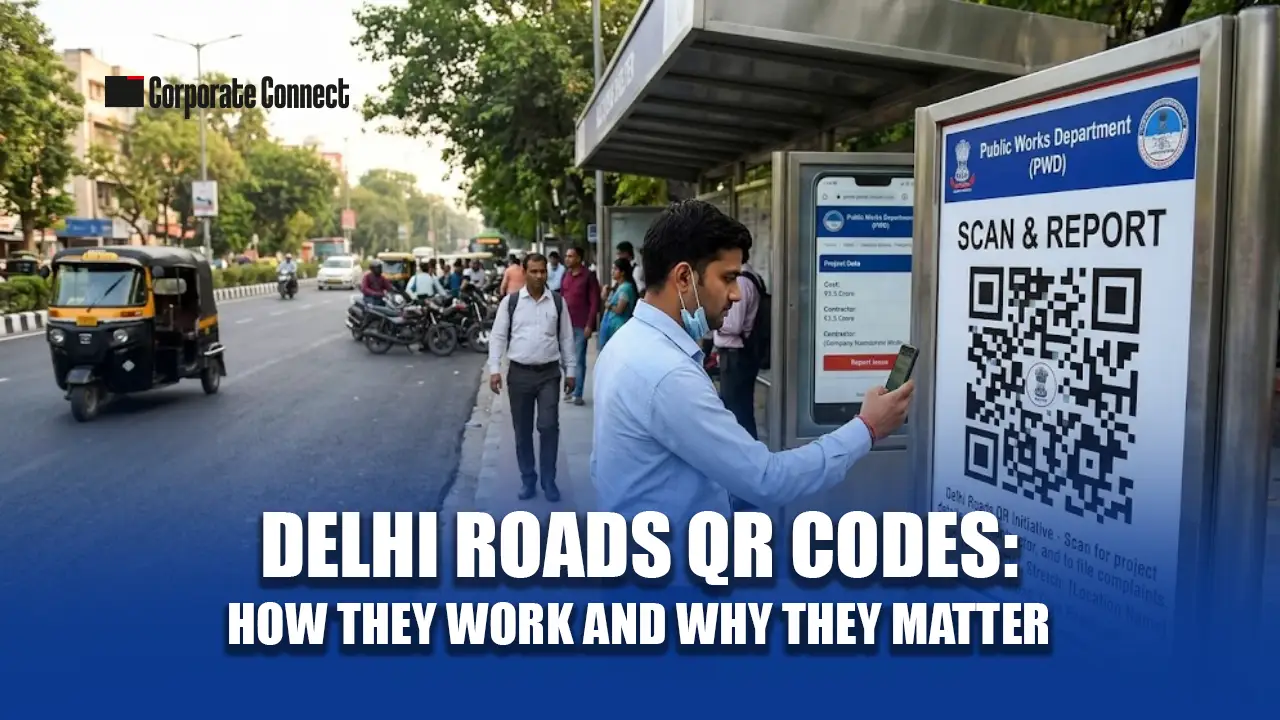
Delhi is implementing a “smart” roadwork tracking system. QR codes are now being placed on display boards along recently repaired or repaved roads by the city’s Public Works Department (PWD). With this program, citizens will have an easy way to report issues and the government will be more transparent.
These codes will be visible at bus stops, busy street corners, and major intersections once they are fully implemented. After completing any road works, the PWD is supposed to complete the installation within a week. To make them clearly identifiable, a standard design will be employed.
How the System Works
According to NDTV, scanning the code with your smartphone opens a webpage with information on that particular stretch of road. You can see right away:
- Project Details: The road’s name, its exact length, and the date the work ended.
- Costs: The total amount of public money spent on the project.
- Accountability: The name of the building company and the specific agency in charge.
- The Guarantee: How long the builder is legally required to fix any new cracks or holes for free.
Citizen Power
The feedback tool is the most important component of this project. If someone finds a pothole or poorly maintained road, they may report it or offer comments using the same link that is posted nearby. According to PWD Minister Parvesh Verma, this action would facilitate communication between the public and the government. It guarantees that officials pay attention and respond swiftly.
Ensuring Quality
The government has established stringent regulations to ensure the system remains dependable. To demonstrate that the boards are up, local offices are required to provide reports within ten days of a project’s completion. Additionally, teams will do routine inspections to make sure the information is accurate and the QR codes continue to work.
FAQs
1. What is Delhi’s new QR code road tracking system?
Delhi’s Public Works Department (PWD) has introduced QR codes on roads to provide real-time information about roadwork projects and allow citizens to report issues easily.
2. Where will these QR codes be placed?
QR codes will be installed at bus stops, major intersections, and busy street corners near newly repaired or constructed roads.
3. What information can users access by scanning the QR code?
Users can view project details such as road name, length, completion date, total cost, contractor details, and maintenance warranty period.
4. How can citizens report road issues using the QR code?
After scanning the code, users can access a feedback portal where they can report potholes, damage, or poor maintenance directly to authorities.
5. Who introduced this initiative in Delhi?
The initiative has been implemented by the PWD under the leadership of Parvesh Verma.
6. What is the main objective of this QR code system?
The goal is to improve transparency, ensure accountability, and create a direct communication channel between citizens and the government.
7. When are QR codes installed after roadwork completion?
PWD is required to install QR codes within one week of completing any road repair or construction project.
8. How will the government ensure the system works properly?
Authorities will conduct regular inspections and require local offices to submit reports within 10 days to ensure QR codes remain functional and accurate.
9. Will contractors be held accountable for poor road quality?
Yes, the system includes warranty details, making contractors responsible for fixing defects like cracks or potholes within a specified period.
10. How does this initiative benefit citizens?
It empowers citizens to monitor public spending, report issues instantly, and ensures faster response from authorities for better road maintenance.
Must Read: