
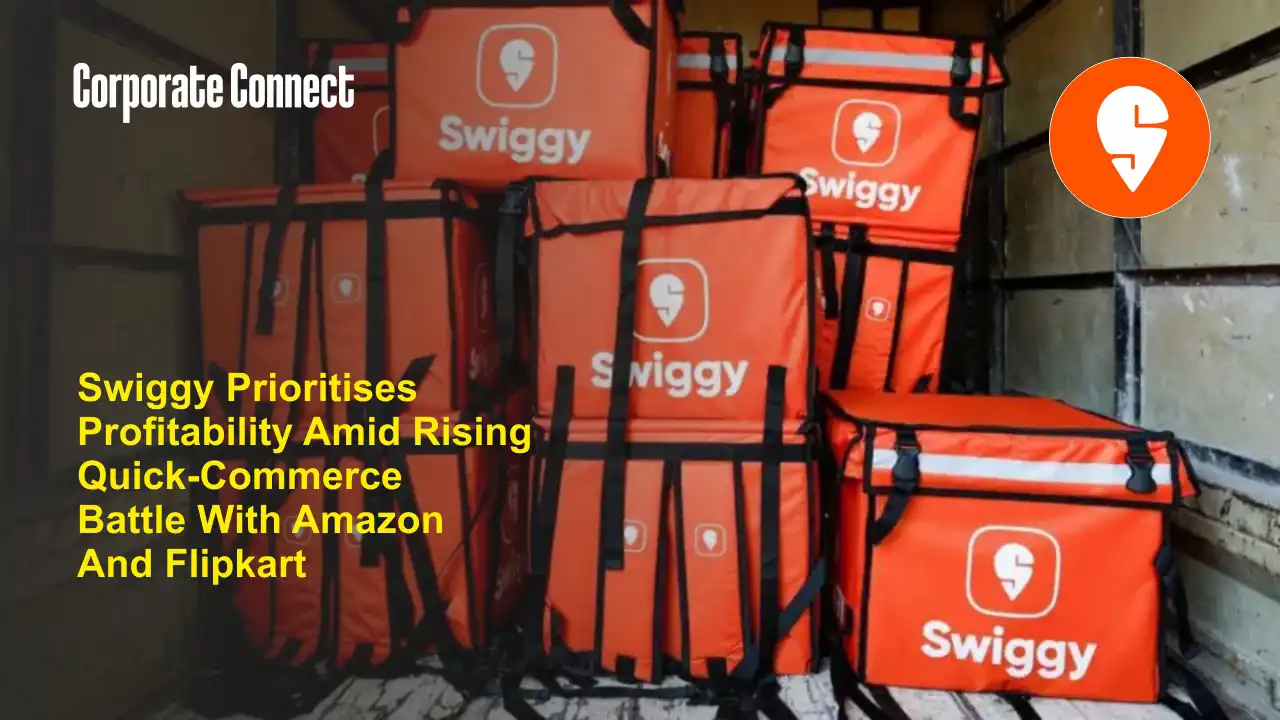
Swiggy is choosing profitability over aggressive expansion as competition in India’s quick-commerce market intensifies, with rivals such as Flipkart, Amazon and Reliance Retail investing heavily to cut delivery times and attract consumers through discounts.
Sriharsha Majety, the CEO of Swiggy, has chosen not to compete with rivals in a race to deliver goods in a matter of minutes over a larger geographic area, according to a Bloomberg article. Rather, the company is concentrating on increasing unit economics and keeping high-value clients, even if this means slower customer acquisition in the near future.
The plan is implemented in the midst of one of the most keenly followed consumer technology wars in the world. Investors from around the world, such as SoftBank, Temasek, and West Asian sovereign wealth funds, have invested billions of dollars in India’s quick-commerce sector, placing their bets on the nation’s dense urban markets, inexpensive delivery systems, and extensive use of digital payments.
Instamart, the quick-commerce division of Swiggy, runs more than 1,100 dark stores throughout India, allowing for speedy delivery of household goods, electronics, and food. Nevertheless, the corporation only opened seven new locations in the March quarter, indicating a more cautious approach to growth.
According to Majety, investor conversations are still focused on creating a clear strategy for Instamart’s expansion and financial success. He maintained that becoming involved in the current spending race would only postpone the difficulty of creating a viable company.
Investor Concerns Grow
Despite Swiggy raising almost Rs 10,000 crore through its public listing in December, the company’s shares have dropped more than 30% this year.
JM Financial analysts warned in April that if Swiggy didn’t keep up its growth speed, it may lose its significance in fast commerce. Instamart’s growth has slowed for the past two quarters, and earlier this month, a shareholder vote on a plan for governance reorganization narrowly failed, raising concerns.
Instead of matching competitors with incentives and discounts, Swiggy is trying to set itself apart with hard-to-replicate product offerings. Its growing private-label food portfolio, which includes fresh items like short-lived paneer and fresh clotted cream that aren’t often found through organized retail chains, is a crucial component of that plan.
Majety claims that consumers who buy these products exhibit greater rates of retention and repeat business. He contrasted the strategy with customer segmentation tactics used by US retailers.
Telecom Playbook Inspiration
Majety has long argued that logistics density and hyperlocal execution—rather than just having access to capital—will eventually determine success in rapid commerce.
He made reference to Bharti Airtel’s reaction to Reliance Jio’s market debut, drawing a comparison with the Indian telecom industry. He pointed out that throughout the industry’s price battle, Airtel opted to safeguard profitability rather than aggressively pursue subscriber expansion, a move that ultimately helped it emerge stronger as a number of rivals either left or consolidated.
In fast commerce, where businesses are under pressure to strike a balance between growth goals and profitability, Swiggy thinks a similar discipline is necessary.
Over the last four quarters, Instamart’s unit economics have improved by five to six percentage points, according to the business. Simultaneously, the March quarter saw Swiggy’s food delivery service rise at its fastest rate in over four years.
Even if it produces short-term profits, Majety contended that depending on incentives to buy market share could jeopardize a company’s long-term competitive position.
Sector Faces Consolidation
For India’s quick-commerce sector, the argument between growth and profitability is becoming more and more important. Albinder Dhindsa, CEO of Blinkit, had previously speculated that the industry would eventually see consolidation if smaller firms find it difficult to maintain losses and obtain new investment.
Majety stated that he now devotes a great amount of his time to Instamart and rejected JM Financial’s argument that a sale of the business to a bigger competitor would benefit shareholders.
He insisted that Swiggy is still sufficiently capitalized, pointing out that the business now has cash reserves of about Rs 15,000 crore. Majety claims that if Swiggy were to lose market share, it would be due to its future strategic decisions rather than a lack of funding.