
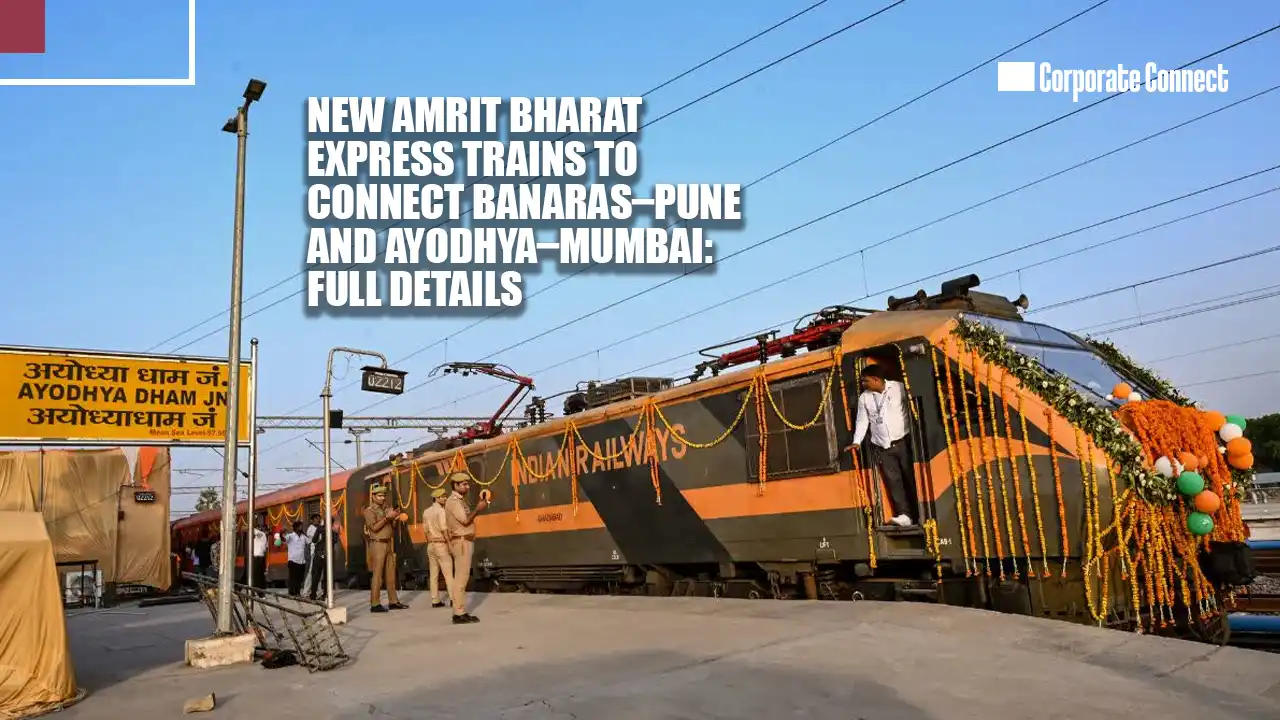
In an effort to improve rail connectivity between Uttar Pradesh and Maharashtra, Prime Minister Narendra Modi has launched two new Amrit Bharat Express trains. The goal of the recently introduced services—Banaras to Pune and Ayodhya to Mumbai—is to simplify and lower the cost of long-distance travel.
Indian Railways is working to make these trains more accessible for regular passengers.
The introduction coincides with an increase in demand for low-cost travel options, as many people are looking for Amrit Bharat Express routes, features, and ticket data.
By providing direct links between important locations, the trains are anticipated to help pilgrims, migratory workers, and everyday travelers.
ROUTES AND LAUNCH INFORMATION FOR AMRIT BHARAT EXPRESS
On April 28, 2026, the two new trains were officially launched. The following routes will be used by them:
- Banaras (Varanasi) to Hadapsar (Pune)
- Ayodhya to Lokmanya Tilak Terminus (Mumbai)
Travel between northern and western India is made easier by these routes, which link important religious and economic sites.
Passengers traveling around Uttar Pradesh, Madhya Pradesh, and Maharashtra are anticipated to be served by the weekly services.
Prioritize accessible and reasonably priced travel.
Amrit Bharat Express trains are primarily intended for those with low and moderate incomes. They are an affordable choice because they are completely non-AC and come with general and sleeper class coaches.
In order to enable more people to travel great distances at reasonable prices, the trains strive to provide a balance between comfort and cost.
AMRIT BHARAT EXPRESS’S PRIMARY ASPECTS
These trains have a number of contemporary improvements to increase passenger comfort and safety:
- CCTV surveillance systems
- Emergency talk-back systems
- Fire safety mechanisms
- Sealed gangways
- Pantry facilities and Divyang-friendly coaches
Additionally, they employ push-pull technology, which permits operation from both ends and increases speed and efficiency.
WHY IT MATTERS TO USE THESE ROUTES
The roads from Ayodhya to Mumbai and Banaras to Pune are in great demand. These vehicles will:
- Support religious tourism, especially to Ayodhya
- Help migrant workers travel more easily between states
- Improve access between smaller towns and major cities
For instance, a variety of travelers can benefit from the Ayodhya-Mumbai route since it passes via important stations like Sultanpur, Pratapgarh, Jabalpur, and Nashik.
A GROWTH IN INDIA’S RAIL NETWORK
The introduction is a component of a larger strategy to enhance connectivity and modernize Indian Railways. The number of Amrit Bharat Express services throughout the nation is still increasing as a result of these expansions.
It is anticipated that the change will facilitate travel, particularly for people who depend on reasonably priced train options.
FAQs
1. What are the new Amrit Bharat Express trains launched by Indian Railways?
The newly launched Amrit Bharat Express trains connect Banaras (Varanasi)–Pune and Ayodhya–Mumbai, aiming to improve affordable long-distance travel across Uttar Pradesh and Maharashtra.
2. When were the Amrit Bharat Express trains launched?
The new trains were officially launched on April 28, 2026, as part of efforts to enhance rail connectivity between northern and western India.
3. What are the routes of the new Amrit Bharat Express trains?
The two main routes are the following:
- Banaras (Varanasi) to Hadapsar (Pune)
- Ayodhya to Lokmanya Tilak Terminus (Mumbai)
These routes connect major religious, cultural, and economic hubs.
4. Who launched the Amrit Bharat Express trains?
The trains were launched under the leadership of the Prime Minister of India, Narendra Modi, as part of Indian Railways’ modernization initiative.
5. What is special about Amrit Bharat Express trains?
These trains are designed for affordability and include features like the following:
- CCTV surveillance
- Fire safety systems
- Emergency talk-back facilities
- Divyang-friendly coaches
- Pantry services
- Push-pull technology for better speed and efficiency
6. Are Amrit Bharat Express trains air-conditioned?
No, these trains are non-AC services and include general and sleeper class coaches, making them more affordable for daily and long-distance travelers.
7. Why are these routes important?
The Banaras–Pune and Ayodhya–Mumbai routes are important because they:
- Support religious tourism (especially Ayodhya)
- Help migrant workers travel easily
- Improve connectivity between smaller towns and major cities
8. How frequently will these trains run?
The services are expected to operate on a weekly basis, serving passengers across Uttar Pradesh, Madhya Pradesh, and Maharashtra.
9. What technology is used in Amrit Bharat Express trains?
These trains use push-pull technology, which allows for locomotives at both ends for improved speed, efficiency, and smoother operations.
10. What is the goal of the Amrit Bharat Express project?
The main goal is to provide affordable, safe, and efficient long-distance travel for middle- and low-income passengers while strengthening India’s railway network.