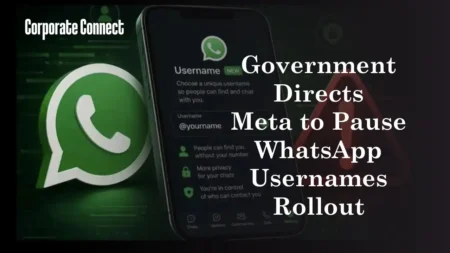


In addition to WhatsApp suspending 9,400 accounts implicated in such offenses, the center has informed the Supreme Court that a multifaceted approach including telecom regulators, service providers, the RBI, IT companies, and the CBI has been taken to address the growing threat of digital arrest scams.
According to sources, the Indian Cybercrime Coordination Centre (I4C) of the Ministry of Home Affairs (MHA) documented the action and submitted a thorough status report in response to the Supreme Court’s February 9 directives to reduce the nation’s increasing number of digital arrests.
Chief Justice Surya Kant’s bench, which had taken suo motu cognisance of online frauds, including digital arrests, issued a number of directives, such as requesting that the Reserve Bank of India (RBI), the Department of Telecommunications (DoT), and other parties convene to develop a framework for compensation in cases involving digital arrests.
The tech giant WhatsApp’s enforcement activities over the past 12 weeks since January of this year were described in the new status report, which was submitted by Attorney General R. Venkataramani.
“In January 2026, WhatsApp initiated a structured, multi-week targeted investigation primarily focused on digital arrest frauds targeting Indian users in response to concerns expressed by I4C, MEITY (Ministry of Electronics and Information Technology), and DoT.
9,400 accounts have been banned for allegedly participating in digital arrests, according to the statement. “This investigation followed a rigorous methodology: identify seed signals, map networks, enforce against the entire network, and build scaled automated defenses.”
According to the status report, WhatsApp is implementing a number of “enforcement innovations” to help protect users, such as logo detection, which uses official police or government symbols in display photographs to identify and deactivate accounts.
According to the status report, WhatsApp is considering adding a new feature that will alert users when they receive a call from a “newly created” or “non-tenured” account, which is a common characteristic of scam profiles. It also plans to automatically hide the profile pictures of suspicious unknown callers in order to stop scammers from using visual cues of authority.
The committee is working on a system to stop suspicious SIM cards within two to three hours of identification, according to the DoT and Telecom Service Providers (TSPs), who have agreed to a rigorous new schedule for neutralizing counterfeit SIM cards.
According to the report, the CBI has established a loss threshold of ₹10 crore to assume control of digital arrest investigations.
As of right now, the CBI has re-registered three significant cases, including two instances from Gujarat involving large-scale financial crimes and a well-known Delhi case in which a single victim was cheated of ₹22.92 crore.
According to the article, on March 12, a high-level interdepartmental committee led by senior officials convened for the third time, bringing together banking regulators, digital platforms, telecom providers, and other stakeholders.
The implementation of a Biometric Identity Verification System (BIVS) to enable real-time, cross-network monitoring of SIM card issuance is one of the main recommendations, it stated.
It further stated that the DoT has been entrusted with putting this system into place by December 2026.
According to the source, WhatsApp has pledged to deploy SIM-binding procedures within four to six years, among other safety measures.
The SIM binding is a security requirement that states that in order for the app to work, the active, KYC-verified SIM card must be physically present in the phone. The app will cease to function if the SIM is switched, removed, or inactive.
According to the article, the RBI has finalized a Standard Operating Procedure (SOP) that instructs banks to temporarily halt suspicious transactions in order to stop money mule activity.
In order to expedite notification and implementation of “Telecommunications (User Identification) Rules and the Biometric Identity Verification System (BIVS) for national-level visibility of SIM issuance,” the MHA urged the top court to take the report on record and requested that DoT issue appropriate directives to implement measures identified by the Inter-Departmental Committee. These directives would require TSPs to comply with the rules and enlist their cooperation.
Additionally, it looked for guidance on how to quickly block suspicious or fraudulent SIM cards used in cybercrime instances, such as digital arrest scams.
“MeitY is advised to secure compliance by WhatsApp to ensure timely implementation of the safeguards and commitments made before the Inter17 Departmental Committee, including implementation of the SIM binding mechanism in compliance with the DoT circular,” it stated.