
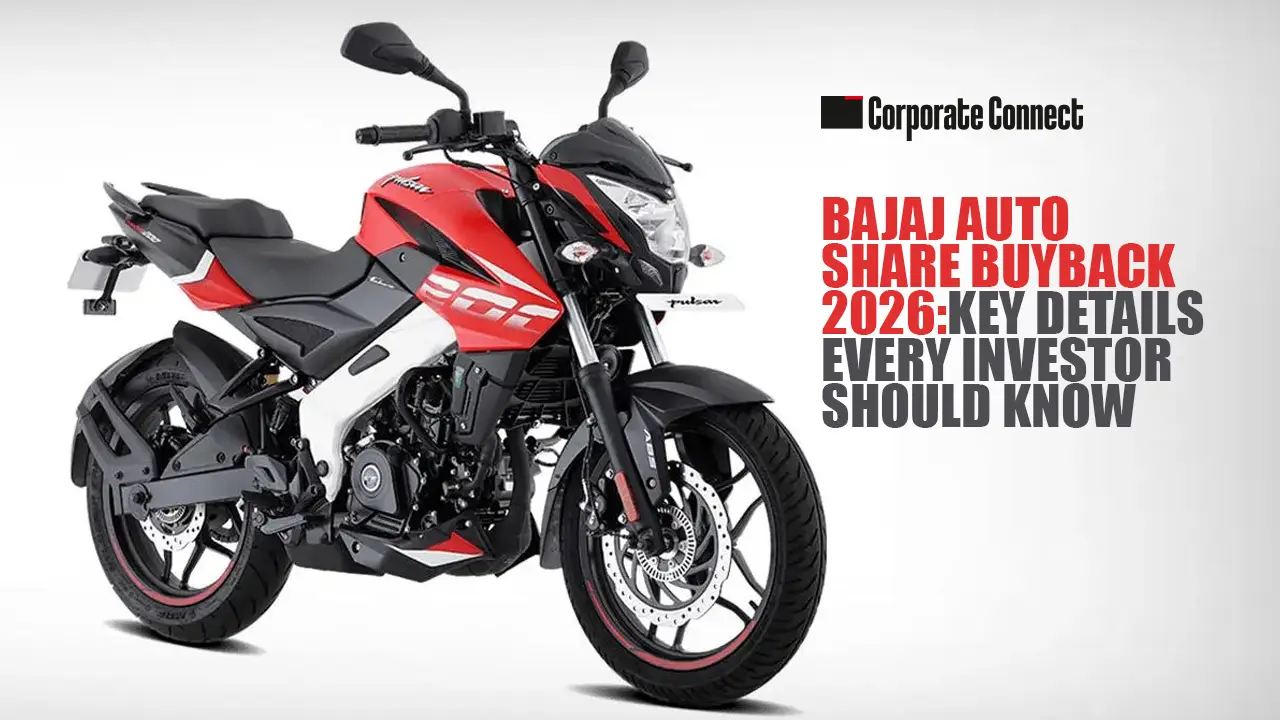
Following the release of record sales and earnings for FY26, Bajaj Auto announced a 5,633 crore share repurchase and a final dividend of 150 per share. The stock was up more than 3% during today’s session after the announcement.
However, what does this buyback really signify for investors? Here’s a quick summary of everything investors need to know about Bajaj Auto’s most recent statement, including how buybacks operate and how they affect EPS, share price, and shareholder returns.
A Share Buyback: What Is It?
Consider a pizza that has been divided into ten portions for ten individuals. Let’s now imagine that two individuals choose to leave the table and sell their pieces to the remaining group. The pizza doesn’t get any smaller. It is still the same size.
Now, however, the pizza only has to be cut into eight pieces rather than ten. This implies that each survivor receives a larger share of the same pizza.
The process of a share buyback is fairly similar. Shares are typically cancelled when a business repurchases its own shares from current shareholders. As a result, there are fewer shares on the market overall.
To put it simply, the company’s profits are now divided among fewer stockholders. Assume:
- A company earns 100 in profit and has 10 shares outstanding.
- That means the 100 profit is divided among 10 shareholders.
- Now imagine the company buys back 2 shares. The total number of shares reduces from 10 to 8.
- The company is still earning the same ₹100 profit, but now fewer shareholders are sharing that profit.
- As a result, each remaining shareholder’s share in the company profits increases.
This is one of the reasons investors frequently view buybacks favorably. Businesses typically declare buybacks when:
- they have strong cash reserves
- generate healthy profits
- want to improve shareholder returns
- believe the business remains strong
Key Details Of Bajaj Auto’s Buyback
On May 6, 2026, Bajaj Auto revealed the buyback and its FY26 financial results. Investors should be aware of the following crucial information:
| Particulars | Details |
| Buyback Size | 5,632.8 crore |
| Buyback Price | 12,000 per share |
| Buyback Method | Tender Route |
| Shares To Be Bought Back | Up to 46.94 lakh shares |
| % Of Total Equity | Around 1.68% |
| Final Dividend | 150 per share |
Some crucial information is still pending, though:
- Record date
- Entitlement ratio
- Buyback opening and closing dates
These details are expected to be announced later by the company.
Why The Buyback Price Matters
The repurchase price is one of the reasons Bajaj Auto’s buyback is receiving a lot of attention.
The buyback price has been set by the business at 12,000 per share. This exceeds the stock’s current market price by more than 15%.
This implies that qualified owners might have the opportunity to tender their shares at a price greater than the current stock price.
Investors find the repurchase more appealing because of this premium, particularly those who wish to book partial profits. However, it’s crucial to keep in mind that not all shares submitted will be approved.
The final benefit for investors will depend on:
- whether they are eligible on the record date
- how many shares they tender
- the entitlement ratio
- the final acceptance ratio
Therefore, investors should wait until the firm announces the record date and entitlement specifics before making a final choice, even when the buyback price appears appealing.
Why Is Bajaj Auto Doing A Buyback?
Bajaj Auto’s announcement of this buyback during a time of robust business development is the main reason it is garnering notice.
In FY26, the company reported:
- Revenue growth of 17% to ₹58,732 crore
- EBITDA growth of 19% to ₹12,019 crore
- PAT growth of 21% to ₹9,825 crore
- EBITDA margin improvement to 20.5%
Consolidated PAT increased 47% to 10,744 crore, while consolidated sales increased 23% to 62,905 crore. Simultaneously:
- Exports hit record highs
- EV business scaled rapidly
- Chetak revenue crossed 4,000 crore
- KTM and Triumph business continued expanding globally
The buyback differs from many conventional buybacks because of this. Companies frequently announce buybacks when their growth is slowed or when there aren’t many chances for expansion. However, Bajaj Auto continues to make significant investments in:
- EVs
- premium motorcycles
- exports
- global partnerships
In spite of this, it is giving stockholders a large return on investment. For this reason, a lot of investors interpret this buyback as a sign of the company’s confidence.
How Does the Buyback Impact Investors?
A repurchase may have a variety of effects on returns for investors.
1. EPS Can Improve
Earnings Per Share (EPS) is one of a buyback’s most significant effects.
EPS is equal to profit divided by the number of outstanding shares.
Even if earnings stay the same, EPS may rise if the total number of shares decreases following a buyback. Investor mood and value multiples can occasionally be enhanced by higher EPS.
2. Existing Shareholders Get An Exit Opportunity
Due to Bajaj Auto’s use of the tender process, shareholders may return their shares to the business for ₹12,000 each.
This is significant because investors may have a premium exit opportunity because the repurchase price is more than 15% more than the current market price.
Investors might not be able to effectively tender all of their shares, though. The entitlement percentage and total buyback participation determine the final acceptance.
3. Buybacks Can Improve Market Sentiment
Buybacks are frequently interpreted as an indication of management’s optimism for the company’s future expansion.
In the case of Bajaj Auto, the buyback follows record sales, profits, robust export growth, and quick EV expansion. That enhances the enthusiasm surrounding the announcement.
How Does the Tender Route Work?
The buyout of Bajaj Auto will take place via tender. Using this approach:
- eligible shareholders can tender shares to the company
- the company buys back shares at a fixed price
- acceptance depends on entitlement and overall participation
Investors should be aware of the following key terms:
- Record Date: This is the date used to determine which shareholders are eligible for the buyback.
- Entitlement Ratio: This shows the minimum number of shares a shareholder may be eligible to tender.
- Acceptance Ratio: This determines how many tendered shares are actually accepted by the company.
These data have not yet been disclosed by the company.
What Should Investors Watch Out For?
Investors should consider a few factors before taking part in the repurchase.
- Record Date Announcement: Since eligibility is contingent upon holding shares prior to the official record date, investors should keep an eye on this date.
- Share Price Volatility: Record dates and buyback announcements can cause stocks to fluctuate.
- Tax Implications: Depending on the holding duration and investor category, different tax treatment may apply. Before taking part, investors should be aware of the necessary taxes.
- Long-Term Business Fundamentals: Although buybacks might boost investor confidence, the company’s future growth in terms of revenue, profitability, and expansion will still determine the long-term stock performance.
Final Thoughts
The 5,632.8 crore repurchase by Bajaj Auto is noteworthy since it follows a year of record sales, earnings, and robust business expansion in both EVs and exports.
The repurchase provides investors with a wider indication of the company’s financial stability as well as a possible short-term opportunity through the tender route. Before making a choice, shareholders should still keep an eye on the record date, entitlement information, and acceptance ratio.