

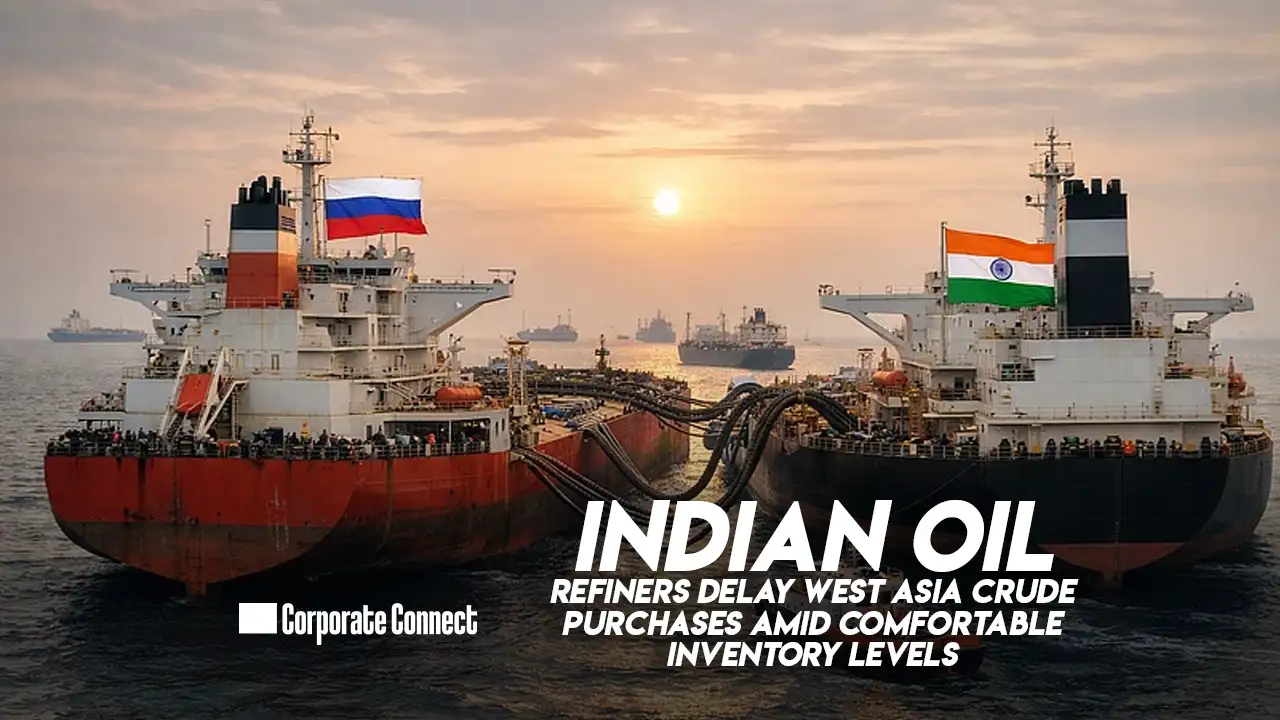
Even if the Strait of Hormuz reopens to commercial traffic, India’s state-run refiners have already acquired enough crude for the next two months and are not in a rush to start buying from the Middle East again.
According to persons familiar with the situation who wished to remain anonymous since the information is confidential, Middle Eastern suppliers, such as Abu Dhabi National Oil Co., have requested local processors to start accepting contractual amounts under long-term supply agreements. However, they stated that the refiners have not yet made a commitment.
After the US and Iran reached a temporary peace agreement this week that might permit transits to restart, the world’s oil market is focused on the canal. Due to a twin blockade of the strait by both Tehran and Washington during the crisis, energy exports first came to a near complete stop. However, they are gradually beginning to resume as ships begin to pass through.
According to statistics gathered by Kpler, India’s imports of Middle Eastern oil, the majority of which is acquired under term contracts, decreased in the second quarter to the lowest level since at least 2013. In order to make up for the missing Persian Gulf barrels, the state-owned refiners accepted extra spot cargoes from other sources, such as South America and Russia.
According to the residents, the central administration in New Delhi has not yet decided when ships in the area can safely return to carry cargo. The South Asian country’s state-owned refiners usually acquire Middle Eastern petroleum on a loading basis, meaning that buyers must organize shipping.
Because of the uncertainties surrounding the longevity of the ceasefire agreement, refiners are also preparing for higher freight charges as international customers scramble to acquire tankers. This increases the appeal of low-cost cargoes purchased on a delivered basis from suppliers like Russia.
Indian refiners are expected to keep accepting the nation’s barrels despite the US waivers on Russian crude expiring on Thursday because the industry has mostly developed workarounds, the people added. According to them, Moscow’s shipments are still inexpensive, with savings of $1 to $2 a barrel compared to Dated Brent. The sources said that as supply availability improves, the savings can increase much further.
According to the persons, Indian Oil Corp. recently submitted a tender to charter a very big gas carrier, a Suezmax tanker, and a very large crude carrier to transport crude and liquefied petroleum gas from ports outside the Strait of Hormuz.
They stated that the tender should not be interpreted as a hint that imports from the area will soon resume because the state-owned refiner with its headquarters in New Delhi had been testing the market for vessel availability.
Adnoc chose not to respond. Separately, emails requesting comments were not immediately answered by Indian Oil or the country’s shipping and oil ministries.
| Topic | Details |
|---|---|
| Current Crude Stock | Indian state-run refiners have enough crude oil to meet demand for the next two months. |
| Middle East Purchases | Refiners are not rushing to resume crude purchases from West Asia despite easing tensions. |
| Reason for Delay | Existing inventories are sufficient, and uncertainty remains over the durability of the ceasefire and shipping safety. |
| Request from Suppliers | Suppliers, including Abu Dhabi National Oil Co. (ADNOC), have urged Indian refiners to resume contractual crude lifting. |
| Government Position | The Indian government has not yet declared the region fully safe for cargo movement. |
| Impact of Strait of Hormuz Crisis | Oil exports through the Strait nearly halted during the conflict but are gradually resuming after a temporary US-Iran peace agreement. |
| Alternative Crude Sources | India increased spot crude purchases from Russia and South America to offset lower Middle East imports. |
| Middle East Imports Trend | India’s imports from the Middle East fell to their lowest quarterly level since at least 2013 in Q2, according to Kpler data. |
| Russian Oil Advantage | Russian crude remains $1–$2 per barrel cheaper than Dated Brent, with discounts expected to widen as supply improves. |
| Shipping Concerns | Refiners expect higher freight rates due to limited tanker availability and ongoing geopolitical uncertainty. |
| Indian Oil Tender | Indian Oil Corp. floated tenders for VLCC, Suezmax, and VLGC vessels, mainly to assess vessel availability rather than immediately resume Gulf imports. |
| Industry Outlook | Refiners are expected to maintain a wait-and-watch approach, relying on existing inventories and competitively priced Russian crude before increasing Middle East purchases. |