
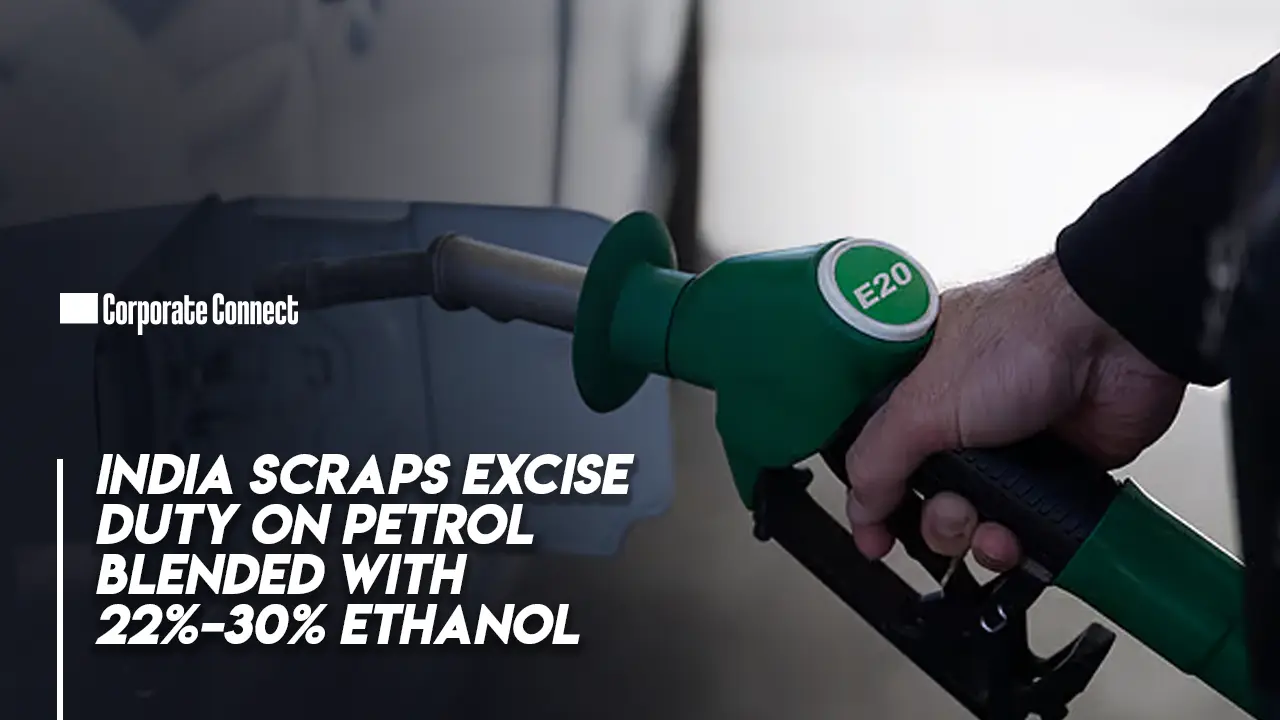
India’s efforts to boost the use of alternative fuels and lessen reliance on imported crude oil have been aided by the removal of the excise duty on petrol blended with increasing levels of ethanol.
A government announcement on Wednesday states that petrol with 22% to 30% ethanol will not be subject to excise tax.
WHAT DOES THE EXCISE DUTY EXEMPTION MEAN?
The government levies an excise levy on a number of products, including fuels. The government is making fuel mixes with higher ethanol content more economically appealing for manufacturers and suppliers by exempting them from this duty.
Petrol with ethanol content between 22% and 30% is covered by the notification.
The move is anticipated to promote the production and supply of higher ethanol-blended fuels, but the government has not yet announced any immediate modifications for conventional petrol supplied at retail locations.
The rationale for India’s push for ethanol-blended petrol
India’s energy needs are largely met by imported crude oil. Increasing the usage of ethanol, which is made domestically from agricultural feedstocks like grains and sugarcane, helps lessen reliance on imported fossil fuels and lessens the nation’s susceptibility to fluctuations in the price of oil.
In addition to giving farmers access to a new market, the ethanol blending program has helped the government achieve its larger objective of enhancing energy security.
Over the past ten years, India has quickly increased the amount of ethanol blended into petrol in an effort to reduce its oil import costs and support cleaner fuels.
India seeks to promote the use of petrol with a higher proportion of ethanol, as seen by the most recent tax reduction. It also illustrates the government’s ongoing emphasis on alternative fuels at a time when the nation is attempting to strike a balance between the need to lessen dependency on imported oil and the country’s growing energy needs.
There might not be much of an immediate impact on customers. Nonetheless, the action represents a further step in India’s long-term strategy to boost the proportion of ethanol produced domestically in its fuel mix for transportation.