
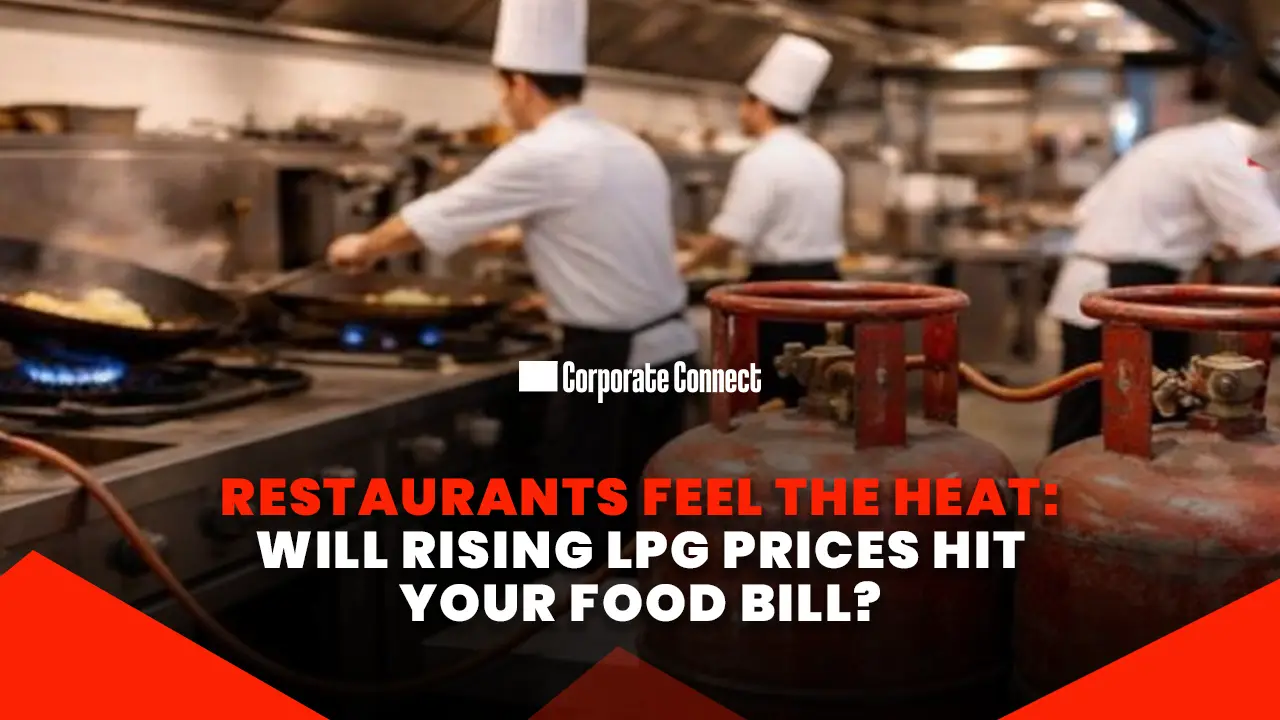
India’s commercial LPG customers are starting to face pressure because of rising global crude oil prices and supply issues related to conflicts in West Asia. While local LPG prices are still largely constant, restaurants, cloud kitchens, and hospitality enterprises are experiencing greater operational costs. Businesses are more susceptible to worldwide energy shocks since commercial cylinders, in contrast to home LPG, are market-linked and updated more regularly.
While household cooking gas prices have not changed, commercial LPG prices have increased by Rs 42–53.50 per 19-kg cylinder since June 1 due to rising crude oil costs and supply issues related to the Iran conflict and disruptions near the Strait of Hormuz. Restaurants, lodging facilities, and cloud kitchens that rely significantly on LPG for everyday operations are under more financial strain as a result of the increase.
Logistics Nightmare
Restaurant owners said that the effects have been seen right away, especially for those that rely heavily on their kitchens and have challenging logistics. In recent weeks, a few operators have also reported shortages and supply delays.
Due to their heavy reliance on gas for everyday operations, restaurants are particularly vulnerable to LPG volatility, according to Aashi Gupta, Co-Founder and Marketing Head of Salt Café Delhi NCR. He also stated that “repeated price increases directly impact operational costs and profitability.”
Rising LPG prices have exacerbated already existing cost pressures, according to Laksh Dembla, founder and director of the Basil Restaurant at Whispering Woods Resort near Mumbai. This is especially true for hospitality enterprises situated outside of metropolitan centers, where logistics are already costly. “There were days when there were no cylinders available at all,” he said, adding that supply constraints in some locations had made operations even more difficult.
Commercial LPG is still a crucial operational component for eateries and bars, according to Anirudh Khanna, Managing Director of Independence Brewing Company. In an already inflationary operating environment, growing fuel prices put more strain on margins. “Margins are still being compressed by higher fuel costs,” he stated.
Will Clients Cover the Price?
Instead of immediately passing costs on to customers through menu price increases, the majority of hospitality organizations stated that they are now absorbing the rise while concurrently searching for operational reductions.
According to a number of operators, tighter procurement, inventory control, kitchen optimization, and waste reduction are now part of cost management initiatives. In order to minimize supply disruptions and lessen reliance on LPG, Dembla claimed his restaurant converted about half of its cooking operations to electric equipment; however, he pointed out that the switch itself came with significant upfront expenses.
Operators are putting internal efficiency ahead of customer-facing price hikes, according to Hitesh Keswani, Managing Director and CEO of Aspect Hospitality. He stated, “Menu pricing is always the last conversation.”
According to Anirudh Khanna, Independence Brewing has decided to concentrate on process optimization and operational discipline rather than raising menu prices or cutting portions. “Maintaining consistency in the guest experience is still a top priority,” he stated.
Do LPG Price Hikes Hurt Smaller Restaurants More?
fewer restaurants and cloud kitchens, according to operators, are more susceptible to frequent increases in LPG prices since they have fewer margins, less inventory, and less procurement power than large chains.
Larger chains are comparatively better positioned to withstand shocks because of scale efficiencies and centralized procurement, but smaller operators with less financial flexibility are more severely affected.
According to Dembla, smaller operators may lack the bandwidth to undertake expensive operational changes, whereas larger hospitality firms typically have stronger supply networks and greater flexibility to absorb disturbances. He stated, “The impact is much more severe.”
According to industry executives, as hospitality organizations deal with ongoing fuel price volatility, the necessity for more stringent operational discipline, efficiency planning, and diverse energy strategies is being reinforced by repeated LPG price hikes.