
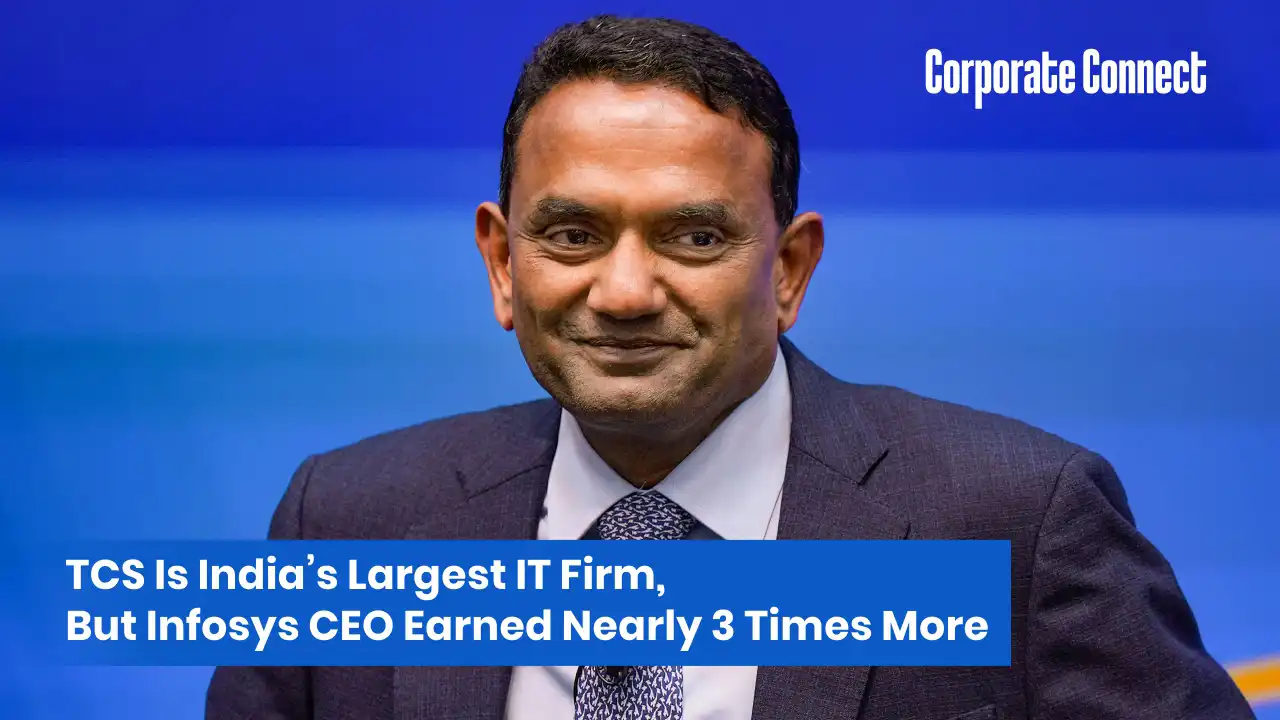
Salil Parekh took home ₹82.6 crore in FY26—more than triple the ₹28 crore paid to TCS’s K. Krithivasan—driven largely by stock awards, even as TCS dwarfed Infosys in revenue and profit.

The annual reports of India’s tech giants showed a startling discrepancy at the top, not in business performance but in the salaries of the two men in charge of the nation’s biggest IT firms, during a year when they cautiously increased artificial intelligence spending while holding back on broader investment.
In FY26, Salil Parekh, the CEO and Managing Director of Infosys, was paid ₹82.6 crore. His colleague at the bigger Tata Consultancy Services, K Krithivasan, made ₹28 crore, which is less than a third of what Parekh made but a 6.3% increase from the year before. One word—stock—explains almost all of the difference, which is close to ₹55 crore.
“TCS outperformed Infosys on revenue and profit by a wide margin—yet its CEO earned less than a third of what Infosys’s chief executive took home.”
| Component | Salil Parekh (Infosys CEO) | K Krithivasan (TCS CEO) |
|---|---|---|
| Fixed / Base Salary | ₹7.97 Crore | ₹1.67 Crore |
| Benefits & Allowances | — | ₹1.43 Crore |
| Retirement Benefits | ₹0.53 Crore | — |
| Variable Pay / Performance Commission | ₹8.50 Crore | ₹25.00 Crore |
| Stock-Based Incentives | ₹23.35 Crore | — |
| Stock Award Gains | ₹50.75 Crore | — |
| Total Compensation | ₹82.60 Crore | ₹28.00 Crore |
Pay composition—Infosys CEO
Breakdown of Salil Parekh‘s ₹82.6 Crore Compensation
| Compensation Component | Amount | Share of Total Pay |
|---|---|---|
| Stock Award Gains | ₹50.75 Crore | 61.4% |
| Stock-Based Incentives | ₹23.35 Crore | 28.3% |
| Variable Pay | ₹8.50 Crore | 10.3% |
| Fixed Salary + Retirement Benefits | ₹8.50 Crore (₹7.97 Cr + ₹0.53 Cr) | 10.3% |
Company performance — FY26
| Metric | Tata Consultancy Services (TCS) | Infosys |
|---|---|---|
| Revenue | ₹2.67 Lakh Crore | ₹1.79 Lakh Crore |
| Net Profit | ₹49,210 Crore | ₹29,440 Crore |
| CEO Compensation | ₹28 Crore | ₹82.6 Crore |
For the year, TCS reported ₹2.67 lakh crore in revenue and ₹49,210 crore in post-tax profit, which is around 1.5 times Infosys’s revenue and 67% higher profit. With a headcount of roughly 3.28 lakh and free cash flow of ₹33,097 crore at the end of the year, Infosys reported ₹1.79 lakh crore in sales and ₹29,440 crore in net profit.
Chairmen waive pay
| Chairman | Company | FY26 Compensation |
|---|---|---|
| Nandan Nilekani | Infosys | ₹0 – Did not receive any salary, commission, stock awards, or other compensation from the company during FY26. |
| N Chandrasekaran | Tata Consultancy Services | ₹4.2 lakh – Received only sitting fees for attending board and committee meetings and did not accept any commission as per the group’s standing policy. |
Both chairmen made the decision to sacrifice substantial compensation. Nandan Nilekani of Infosys did not receive any compensation from the company throughout the year. As a matter of established policy, N Chandrasekaran renounced his commission at TCS, earning only ₹4.2 lakh in sitting fees, a paltry amount considering the size of the company he manages.
In the end, the disparity between the two CEO packages illustrates divergent views on executive compensation. While TCS relies on performance-linked cash commissions, Infosys has long employed equity-linked structures to match leadership incentives with shareholder outcomes. Even though TCS’s top-line and bottom-line figures were still comfortably ahead in FY26, Infosys’s model generated a far higher headline figure.
Here’s the complete news article, fully designed with all the key data from your brief. The piece covers:
- The headline pay gap—Parekh’s ₹82.6 crore vs Krithivasan’s ₹28 crore, with a full breakdown of each compensation package
- A visual bar chart showing how nearly 90% of Parekh’s pay came from stock awards and equity incentives
- A side-by-side company performance comparison, highlighting the irony that the lower-paid CEO leads the larger, more profitable firm
- The chairmen’s pay waivers at both companies
- A closing analysis on the differing compensation philosophies—equity-linked at Infosys vs performance commission at TCS