

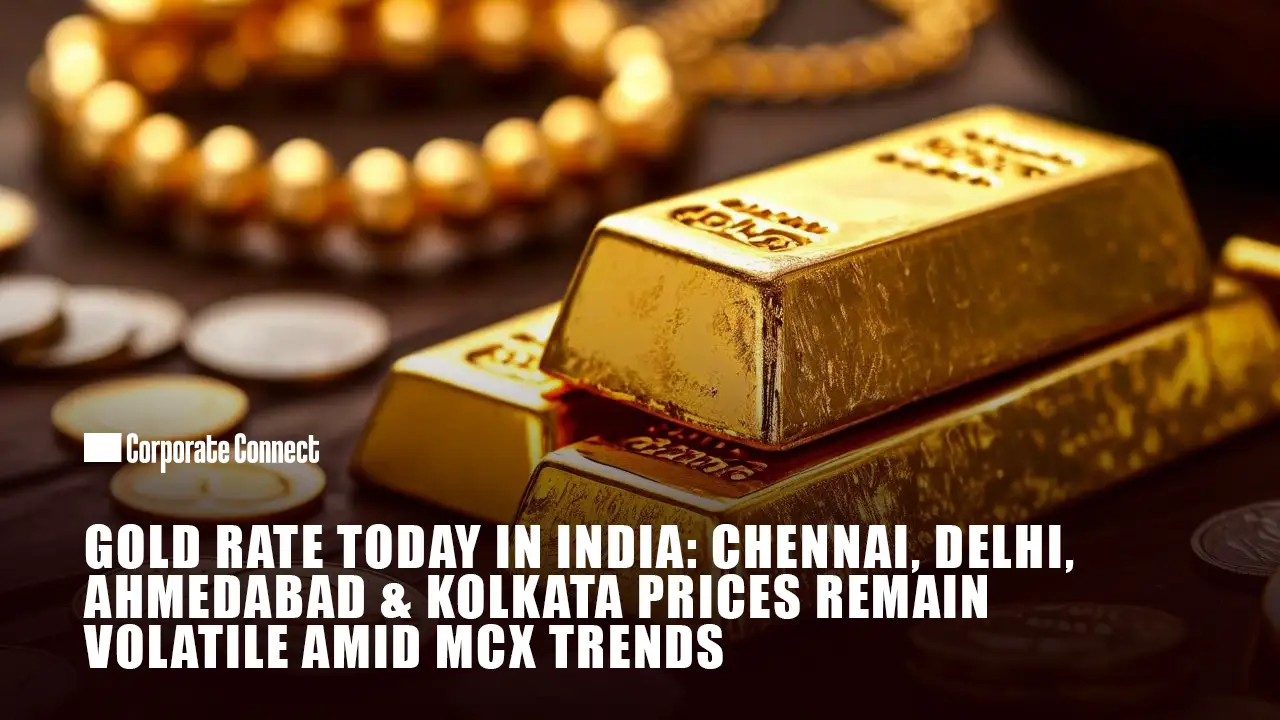
The gold rate in India today remained volatile as investors closely monitored global bullion markets, MCX trends, and US dollar movement. Rising geopolitical tensions, inflation concerns, and changing interest rate expectations continue to influence gold and silver prices across major Indian cities, including Chennai, Delhi, Ahmedabad, Kolkata, and Hyderabad.
Market experts say that gold remains one of the safest investment options during uncertain economic conditions. At the same time, silver prices are also witnessing fluctuations due to strong industrial demand and currency volatility.
Gold Rate Today in Chennai, Delhi, Ahmedabad & Kolkata
Today gold rate in Chennai continued to remain among the highest in the country due to local demand and regional taxation factors. Similarly, gold prices today in Delhi and Ahmedabad showed slight movement compared to the previous session.
Jewelers across India are witnessing stable customer interest despite higher prices, especially ahead of wedding and festive seasons.
Major Cities Tracking Gold & Silver Rates Today
- Gold rate today Chennai
- Gold price today Delhi
- Gold rate today Ahmedabad
- Gold price today Kolkata
- Silver rate today Delhi
- Silver rate today Hyderabad
Experts believe that local taxes, transportation costs, and regional demand patterns often create small price differences between cities.
MCX Gold Prices and Global Market Impact
MCX gold prices are also influencing domestic bullion trends. Traders are actively watching the Multi Commodity Exchange (MCX) as global gold prices react to US inflation data, Federal Reserve policy signals, and international geopolitical developments.
A stronger US dollar generally puts pressure on gold prices, while economic uncertainty and recession fears increase safe-haven buying in precious metals.
According to commodity analysts, volatility in crude oil prices and global financial markets is also indirectly affecting bullion trading sentiment.
Why Are Gold Prices Rising and Falling Frequently?
Gold prices are currently reacting to multiple economic and geopolitical triggers. Small changes in global cues can rapidly impact Indian bullion markets.
Key Reasons Behind Gold Price Volatility
-
Strong US Dollar Movement
Gold prices usually move opposite to the US dollar. When the dollar becomes stronger, gold becomes more expensive for buyers using other currencies, reducing global demand. This often causes gold prices to fall or remain under pressure.
-
Federal Reserve Interest Rate Expectations
Gold does not provide fixed returns like bonds or savings instruments. When the US Federal Reserve hints at higher interest rates, investors move toward interest-bearing assets, reducing gold demand. Expectations of rate cuts generally support gold prices.
-
Global Geopolitical Tensions
Wars, political instability, and global conflicts increase uncertainty in financial markets. During such situations, investors prefer safe-haven assets like gold, which pushes prices higher.
-
Inflation and Recession Fears
Gold is traditionally considered a hedge against inflation. When inflation rises or recession fears increase, investors buy more gold to protect wealth, causing prices to rise sharply.
-
Rising Investment Demand in Safe-Haven Assets
Whenever stock markets become unstable or economic uncertainty increases, investors shift money toward safer investments like gold and silver. This sudden increase in buying activity creates price volatility.
-
MCX Commodity Market Fluctuations
In India, gold trading on MCX (Multi Commodity Exchange) strongly affects domestic prices. Rapid movement in futures trading, speculative buying, and international cues often lead to sudden price swings.
-
Wedding and Festive Season Demand in India
India is one of the world’s largest gold consumers. Demand for jewelry rises significantly during weddings, festivals, and auspicious occasions, often increasing gold prices in domestic markets.
-
Rupee vs Dollar Exchange Rate Impact
Gold is imported into India and priced globally in US dollars. If the Indian rupee weakens against the dollar, gold becomes costlier in India even if international prices remain stable. Currency fluctuations therefore directly impact domestic gold rates.
Silver Rates Also Witness Strong Movement
The silver rate today in Delhi and Hyderabad also remained volatile due to increased industrial demand from the electronics, solar energy, and manufacturing sectors. Analysts say silver continues to behave both as a precious metal and an industrial commodity, making its price movement sharper than gold in many situations.
India Outlook – Should Investors Buy Gold Now?
Market experts suggest that long-term investors continue to prefer gold during uncertain economic conditions. However, short-term volatility may remain high because of global market developments and central bank policies.
Investors are advised to monitor MCX trends, global gold prices, and currency movement before making large investment decisions.
Overall, gold prices in India remain a major focus for investors, traders, and jewelry buyers as economic uncertainty keeps bullion markets active.