
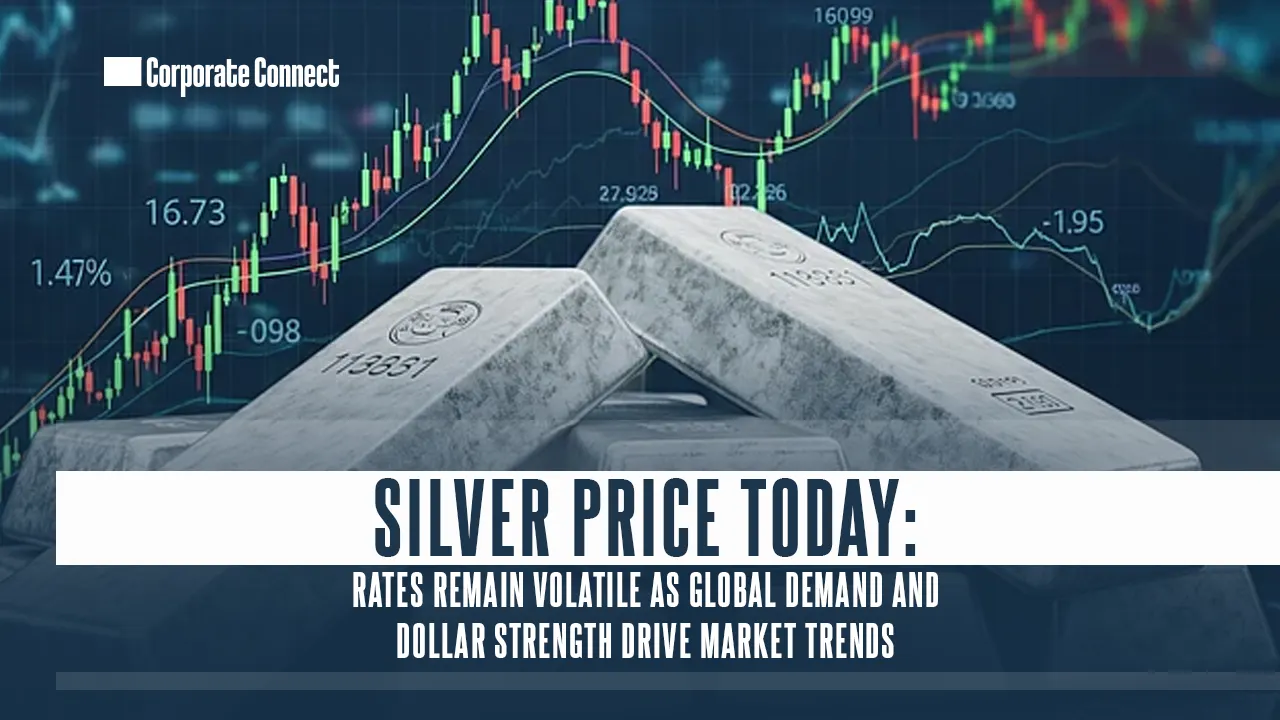
Silver Rates Fluctuate in Domestic and Global Markets Amid Uncertainty
Silver prices today continue to show volatility in both domestic and international markets, influenced by changing global economic conditions, dollar strength, and industrial demand. Investors are closely tracking silver as a safe-haven asset amid ongoing uncertainty in global financial markets.
In India, silver rates have seen slight fluctuations compared to the previous trading session, with demand from jewelry and industrial sectors playing a key role in price movement. Experts say that silver remains sensitive to global cues, especially US inflation data and interest rate expectations from the Federal Reserve.
Along with this, import costs, currency movement of the Indian rupee against the US dollar, and global supply chain trends are also impacting domestic silver pricing. Even a small change in international bullion prices often leads to noticeable movement in Indian markets.
Global Factors Driving Silver Price Movement in 2026
According to market analysts, silver is currently witnessing mixed momentum, supported by strong industrial usage in electronics and renewable energy sectors, while facing pressure from a strong US dollar and shifting investor sentiment.
Traders also note that geopolitical tensions, inflation trends, and central bank policies are continuously influencing precious metal pricing. Safe-haven demand is also adding support during uncertain market conditions.
Additionally, rising adoption of silver in solar panels, electric vehicles, and advanced manufacturing is strengthening the long-term demand outlook. This industrial shift is making silver more than just a precious metal—it is becoming a key industrial commodity.
Key Reasons Behind Silver Price Volatility Today
- Strong US dollar pressure on commodities:
When the US dollar becomes stronger, silver becomes more expensive for other currencies. This reduces global demand, leading to lower or unstable silver prices. A strong dollar usually keeps pressure on precious metals like silver and gold.
- Changing US Federal Reserve interest rate expectations: Silver does not give interest or dividends. When the US Federal Reserve increases interest rates, investors prefer fixed-return assets like bonds instead of silver. This reduces demand and increases price volatility. When rate cuts are expected, silver demand usually rises.
- High industrial demand from electronics & solar energy: Silver is widely used in smartphones, solar panels, EVs, and medical devices. Rising industrial demand supports prices, but when global manufacturing slows, demand drops and causes fluctuations in silver rates.
- Global geopolitical tensions: Wars, trade conflicts, and political instability increase “safe-haven buying.” Investors rush to buy silver during uncertainty, pushing prices up quickly. When tensions ease, prices often fall again.
- Seasonal jewelry demand in India: In India, silver demand rises during festivals and wedding seasons. This seasonal buying creates short-term price spikes, especially in domestic markets.
- Inflation and macroeconomic uncertainty: High inflation makes investors move toward precious metals like silver to protect value. However, uncertainty in inflation trends creates mixed buying and selling pressure, increasing volatility.
- Fluctuations in crude oil and global energy markets: Oil price changes affect global production costs and economic stability. When crude oil prices rise sharply, inflation fears increase, indirectly impacting silver prices through investor sentiment.
- Currency volatility (USD vs. INR impact): Silver is globally priced in US dollars. If the Indian rupee weakens against the dollar, silver becomes more expensive in India even if global prices stay stable. This creates sharp local price movements.
India Outlook – Will Silver Prices Rise Ahead of Festive Season?
Traders are also observing seasonal demand from the jewelry sector and upcoming festive buying in India, which could support silver prices in the near term. However, volatility is expected to continue as global macroeconomic data and geopolitical developments keep influencing market sentiment.
In India, wedding season demand is another major factor that traditionally supports silver consumption. Small investors and households also tend to increase buying during festive periods, which can push short-term prices upward.
However, experts warn that high global interest rates and strong dollar conditions may limit sharp upside in the short term. Investors are advised to track global cues closely before making large buying decisions.
Overall, silver remains a key focus for investors looking for both safety and long-term value in uncertain economic conditions.
Overall Summary
Silver price volatility is the result of a combination of global financial signals, industrial demand, currency movements, and investor sentiment. Because silver plays both roles—a precious metal and an industrial commodity—its price reacts quickly to every major economic change.
FAQs
Q1. Why are silver prices fluctuating today?
Silver prices are fluctuating due to global economic uncertainty, US dollar strength, inflation data, and changing interest rate expectations from the Federal Reserve. Industrial demand and safe-haven buying also impact prices.
Q2. What factors affect silver rates in India?
Silver rates in India are influenced by international bullion prices, the USD to INR exchange rate, import costs, local jewelry demand, and industrial usage in sectors like electronics and solar energy.
Q3. Is silver a safe investment in 2026?
Yes, silver is considered a safe haven asset during economic uncertainty. However, it is also more volatile than gold due to its dual role as both an investment and industrial metal.
Q4. Will silver prices increase in the future?
Silver prices may rise in the long term due to increasing industrial demand from renewable energy, electric vehicles, and electronics. However, short-term movement will remain volatile.
Q5. How does US Federal Reserve policy affect silver prices?
When interest rates rise, silver prices often come under pressure because investors shift to interest-bearing assets. When rates stabilize or fall, silver demand usually increases.
Q6. Does the festive season affect silver prices in India?
Yes, festive and wedding seasons in India increase demand for silver jewelry, which can support short-term price increases.
Q7. Why is silver called an industrial metal?
Silver is widely used in industries such as solar panels, electronics, medical equipment, and EV manufacturing, making it a key industrial commodity in addition to being a precious metal.