
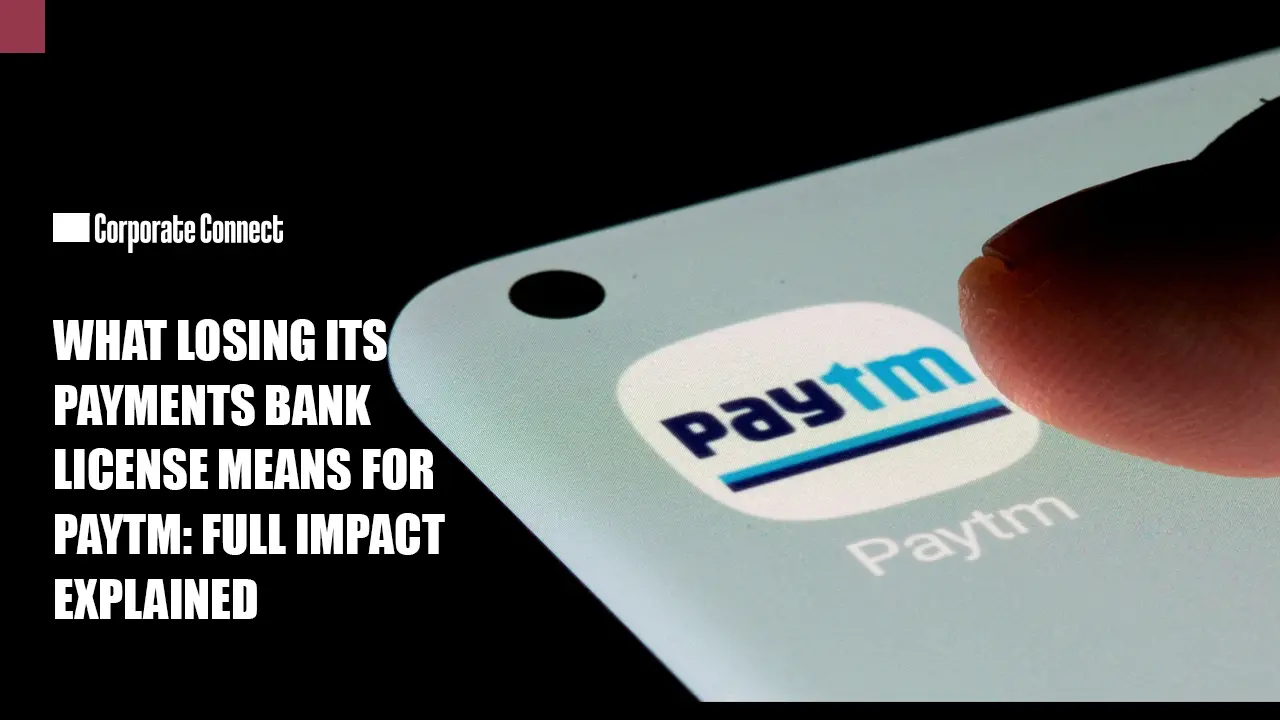
Here’s a complete breakdown of what this means.
Why Did RBI Cancel the License?
The RBI’s decision came after repeated concerns over:
- KYC (Know Your Customer) violations
- Weak compliance systems
- Data monitoring and risk management issues
- Failure to follow regulatory guidelines despite warnings
The central bank’s primary goal is to protect users and ensure financial stability, making compliance non-negotiable.
What Is a Payments Bank & Why Does It Matter?
A payments bank is a special banking model designed to
- Enable digital payments and transactions
- Promote financial inclusion
- Offer basic banking services (without loans)
For Paytm, its payments bank was the backbone of its ecosystem, connecting wallets, UPI, and merchant payments.
Immediate Impact on Paytm
1. Loss of Core Banking Operations
Without the license, Paytm Payments Bank can no longer:
- Accept deposits
- Offer wallet top-ups via bank accounts
- Provide banking services
2. Disruption in Paytm Ecosystem
Paytm’s services, like
- Wallet
- FASTag
- Merchant QR payments
…will need to be shifted to partner banks, creating operational challenges.
3. Revenue Hit
The bank contributed to:
- Transaction fees
- Interest income (float money)
- Cross-selling financial services
This loss could significantly impact Paytm’s revenue streams.
What It Means for Users
For millions of customers:
- Existing balances are safe but may need withdrawal or transfer
- Wallet usage could become restricted
- Users may need to link new bank accounts
The RBI has ensured that customer funds remain protected.
Impact on Merchants
Businesses using Paytm may face the following:
- Settlement delays
- Need to switch payment providers
- Temporary disruption in QR payments
Competitors like PhonePe and Google Pay could gain market share.
Market & Investor Reaction
Such regulatory action typically leads to:
- Stock price volatility
- Investor concerns over governance
- Reduced confidence in fintech compliance
What Are Paytm’s Options Now?
Despite the setback, Paytm can still pivot:
Partner with Other Banks
Continue services via third-party banking partners
Strengthen Compliance
Fix regulatory gaps and rebuild trust
Focus on Core Strengths
Payments, lending distribution, and merchant services
Impact on India’s Fintech Industry
This move sends a strong signal:
- Compliance is now strictly enforced
- Fintech firms must prioritize regulatory discipline
- Trust and governance are becoming key differentiators
Conclusion
The action against Paytm Payments Bank marks a turning point not just for Paytm, but for the entire fintech ecosystem in India.
While the loss of a payments bank licence is a serious setback, it also offers an opportunity for Paytm to restructure, strengthen compliance, and evolve into a more resilient player in the long run.
FAQs
1. What happened to Paytm Payments Bank?
The Reserve Bank of India took regulatory action against Paytm Payments Bank due to compliance issues, restricting its ability to continue normal banking operations.
2. Why did RBI take action against Paytm Payments Bank?
The action was taken due to concerns over KYC violations, weak risk management systems, and non-compliance with regulatory norms.
3. Is my money safe in Paytm Payments Bank?
Yes, customer funds are generally safe and protected under RBI regulations. Users may be required to withdraw or transfer their balances as per official guidelines.
4. Can I still use Paytm after the license issue?
Paytm will continue to operate, but some services linked to its payments bank may be limited or shifted to partner banks.
5. What services are affected by the Paytm Payments Bank issue?
Services that may be impacted include:
- Wallet top-ups
- FASTag services
- Merchant settlements
- Certain banking features
6. Do users need to close their Paytm accounts?
No, users do not need to close their accounts, but they may need to update bank details or shift balances if required.
7. What are the alternatives to Paytm for digital payments?
Users can switch to other platforms like PhonePe and Google Pay for seamless transactions.
8. How will this impact Paytm’s business?
The move may affect Paytm’s revenue, operations, and investor confidence, but the company can recover by strengthening compliance and partnerships.
9. What is a payments bank in India?
A payments bank is a type of bank that can accept deposits and enable digital transactions but cannot offer loans or credit services.
10. What does this mean for India’s fintech industry?
This action highlights that strict compliance and regulation are essential, and fintech companies must balance innovation with regulatory discipline.