
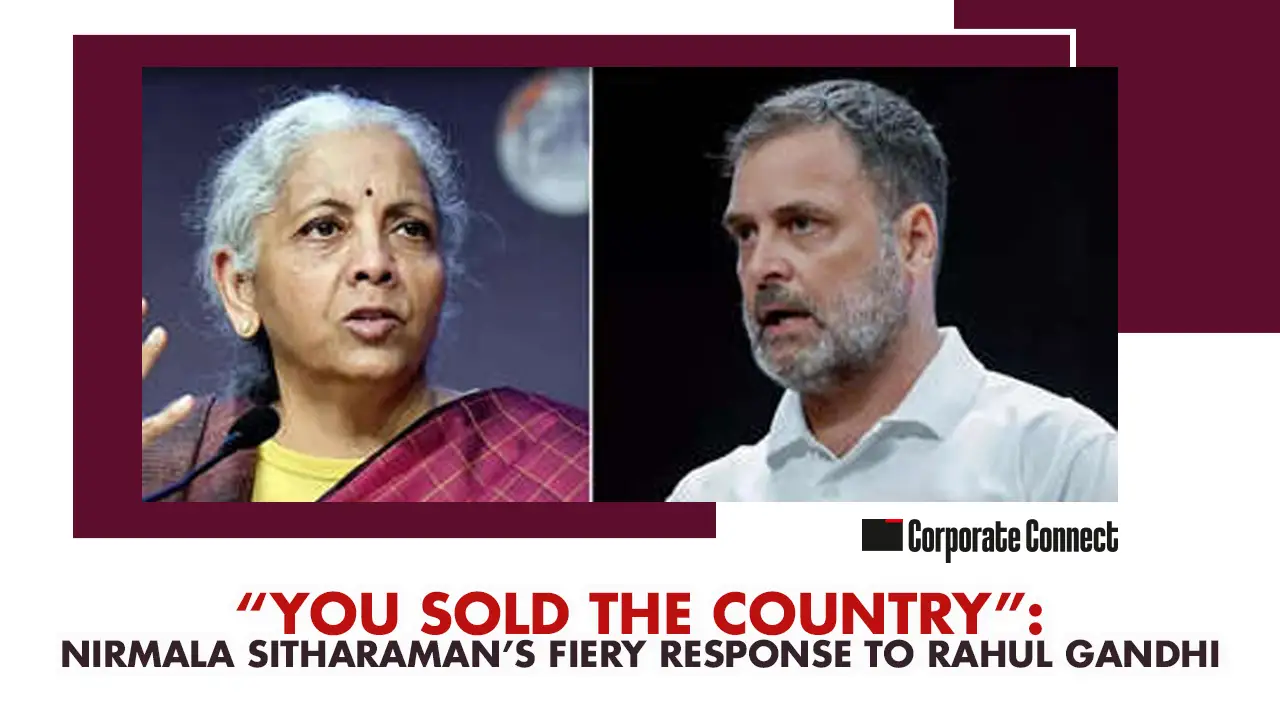
Regarding Rahul Gandhi’s “selling Bharat Mata” statement, Union Finance Minister Nirmala Sitharaman launched a scathing assault. She said that the Congress-led UPA administration was responsible for selling out the country and aligning India’s interests with those of Pakistan.
“The Congress sold the government, the farmers, the poor, and the country,” the Finance Minister said in response to the Lok Sabha’s debate of the Union Budget. It was you who made the connection between India and Pakistan. No one has ever been born who can sell India, and Prime Minister Narendra Modi would never do so, as Kiren Rijiju correctly stated.
Criticism of the Joint Statement of Sharm El-Sheikh
Sitharaman accused the UPA administration of undermining India’s sovereignty and security position in talks with Pakistan, citing the Sharm El-Sheikh Joint Statement. “Those who wished to negotiate with Pakistan in Sharm El-Sheikh are now giving us suggestions on how to hold talks,” she said.
Then-prime minister Dr. Manmohan Singh and his Pakistani counterpart, Syed Yousuf Raza Gilani, reached the Sharm El-Sheikh accord in 2009. In that meeting, which took place seven months after the 26/11 Mumbai attacks, Dr. Singh reaffirmed the need of pursuing the attackers. Those who formerly asserted that Pakistan had no connection to terrorism are now advising the present administration on agreements, Sitharaman added, accusing the opposition leader of betraying the interests of farmers and the poor.
Claims Concerning the 2013 WTO Accord
By raking up a 2013 World Trade Organization (WTO) deal signed during the Congress administration, Nirmala Sitharaman cast doubt on the opposition’s moral character. This agreement addressed public food storage and trade facilitation. According to her, the conditions would have prevented the government from delivering goods through ration stores or acquiring crops from farmers as of January 2017.
The Finance Minister also added that during Dr. Manmohan Singh’s administration, India made concessions on the “Peace Clause” at the WTO summit in Bali, Indonesia. She pointed out that the Trade Facilitation accord (TFA) and Public Stockholding for Food Security were the two foundations upon which the 2013 accord rested. She came to the conclusion that the country as a whole as well as the impoverished and farmers were sacrificed by the Congress.
Rahul Gandhi’s Claims of “Selling India”
Rahul Gandhi had earlier said that the administration should feel humiliated about the trade agreement between India and the United States, saying, “You have sold India.” He said that the government has paved the way for the repression of the poor and that farmers are facing a crisis for the first time in history.
India-US Trade Deal Called “Absurd” by Opposition
Rahul Gandhi called the trade deal “absurd,” pointing out that the average tariff, which was once 3%, has now increased sixfold to 18%. Arguing that India has a strong commitment to the US whereas the US has no, he asserted that US imports will increase from USD 46 billion to USD 146 billion.
Gandhi highlighted a particular clause, saying that India will buy $500 billion worth of technology and energy items from the United States. He criticized the disparity, saying that India is now in a disadvantageous situation since its tariff has increased to 18 percent while the US tax has decreased from 16 percent to zero.
FAQs
1. What did Nirmala Sitharaman say about Rahul Gandhi’s “selling Bharat Mata” remark?
Finance Minister Nirmala Sitharaman strongly criticized Rahul Gandhi’s statement, accusing the Congress-led UPA government of compromising India’s sovereignty and aligning national interests with Pakistan during its tenure.
2. What is the Sharm El-Sheikh Joint Statement controversy?
The Sharm El-Sheikh Joint Statement was signed in 2009 between then PM Dr. Manmohan Singh and Pakistan’s PM Yousuf Raza Gilani. Sitharaman alleged that the UPA government weakened India’s position by engaging Pakistan shortly after the 26/11 Mumbai attacks.
3. Why did Sitharaman mention the 2013 WTO agreement?
Sitharaman referred to the 2013 WTO deal, particularly the Trade Facilitation Agreement (TFA) and Public Stockholding for Food Security, claiming that its terms could have restricted India’s ability to procure crops and distribute food grains under welfare schemes.
4. What is the ‘Peace Clause’ in the WTO context?
The Peace Clause allows developing countries like India to provide food subsidies without facing legal challenges at the WTO. Sitharaman alleged that the UPA government made concessions on this clause during the Bali summit in 2013.
5. What did Rahul Gandhi say about the India-US trade deal?
Rahul Gandhi criticized the India-US trade agreement, calling it “absurd” and claiming that India’s tariffs have increased while the US tariffs have decreased, putting India at a disadvantage.
6. What concerns did Rahul Gandhi raise about tariffs?
Gandhi claimed that India’s average tariff has risen from 3% to 18%, while US tariffs on Indian goods have reduced significantly, leading to a trade imbalance.
7. How did Sitharaman respond to allegations about farmers and the poor?
Sitharaman accused the Congress government of sacrificing the interests of farmers and the poor through international trade deals and policy decisions made during its tenure.