
The iPhone 17e, Apple’s most accessible entry point into the ecosystem, was just formally stated. Similarly, Google’s entry-level phone, the Pixel 10a, made its debut last month. To determine which one provides the best value, compare the two here.
Durability and Design: Modern vs. Minimalist
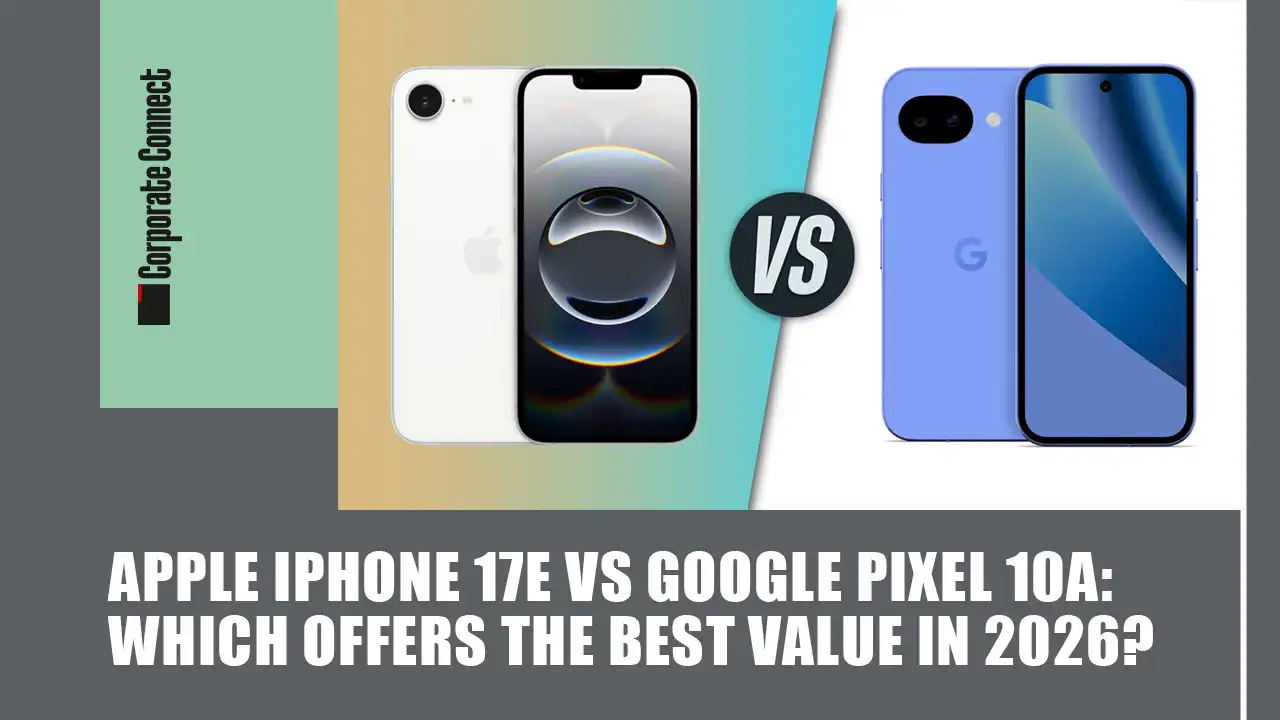
The iPhone 17e uses a design that is similar to the iPhone 14, based to a well-known blueprint. while it has a notch and a 6.1-inch form factor, Apple has improved its durability with Ceramic Shield 2, which it claims is three times more scratch-resistant.
The Pixel 10a, on the other hand, features a fully flush dual-camera system that eliminates the distinctive “visor” hump, marking a significant change in Google’s design philosophy. With a 6.3-inch screen and a matte composite back, it is somewhat bigger. The Pixel’s flat form is maybe more modern, but the iPhone’s glass back makes it seem more “premium.”
Display: 60 Hz versus 120 Hz
The two devices deviate the greatest at this point. Power users in 2026 could find the iPhone 17e’s 60Hz refresh rate to be outdated. However, with a peak brightness of 1200 nits, its Super Retina XDR display is remarkably color-accurate and bright enough for the majority of outdoor settings.
Here, the Pixel 10a’s 120Hz Actua display wins the spec fight. Its max brightness reaches an incredible 3000 nits, and it provides significantly better scrolling and animations. The smoother and brighter display of the Pixel offers a distinct hardware advantage whether you play games or watch a lot of video.
AI and performance
Using the same A19 processor as the standan iPhone 17, the iPhone 17e has a powerful engine. It has the best raw performance and efficiency in its class because to its 3nm technology. In addition, it is the most economical method of gaining access to Apple Intelligence, making features like Clean Up and Live Translation available to more people.
Google has chosen a different approach, using the Tensor G4 instead of the flagship G5 in the Pixel 10a. Despite not having the A19’s raw benchmark results, the G4 is tailored for Google’s Gemini AI. Having features like Gemini Live and Magic Cue operating natively, the Pixel seems like a “smart” companion that anticipates your needs and is supported by an astounding seven years of OS upgrades.
Comparing Cameras
The Apple iPhone 17e has one Fusion camera with 48 megapixels. While not having an ultrawide lens, Apple offers a “optical-quality” 2x telephoto option by sensor cropping. Consistent feasible skin tones and 4K/60 frames per second video capture with Dolby Vision are its strongest points.
The Pixel 10a, on the other hand, has a dual system with a 48-megapixel primary and a 13-megapixel ultrawide sensor. You may take more varied landscape photos as a result. With Night Sight and the new AI-powered editing tools, Google’s computational photography is still the best for static photos.
Battery and Cost
The Pixel 10a’s 5100mAh battery and 45W cable charging capability make it a marathon runner. Despite having a lower 4005mAh battery, the iPhone 17e nevertheless lasts a whole day thanks to iOS efficiency. Notably, the 17e is a big victory for accessory enthusiasts since it finally introduces MagSafe to Apple’s low-cost lineup.
The 25GB version of the Pixel 10a costs $499, while the iPhone 17e costs $599. However, this year, Apple tripled the standard capacity to 256GB.
The Conclusion: Value vs. Ecosystem
Whether you value a advanced, high-performance ecosystem or state-of-the-art display and AI features at a cheaper price point will ultimately determine whether you choose the iPhone 17e or the Pixel 10a.
The “safe” and potent option is the iPhone 17e. With its best-in-class A19 processor, this phone will continue to be quick for many years to come. The 17e is an important boost over earlier low-cost versions if you are already dependent on iMessage, iCloud, and Apple Watch, or if you place a high value on video quality. The upgrade to 256GB of basic storage and the addition of Apple Intelligence make the extra price much more palatable.
However, for tech fanatics seeking the greatest hardware available, the Pixel 10a is definitely the best option. Its ultrawide lens offers photographic versatility that Apple’s single-sensor setup just cannot match, and its 120Hz display makes the iPhone’s 60Hz screen appear outdated. The Pixel 10a is the best bargain in 2026 if you want a phone that feels “smarter” because to its tightly integrated Gemini AI and you like a smoother visual experience.