
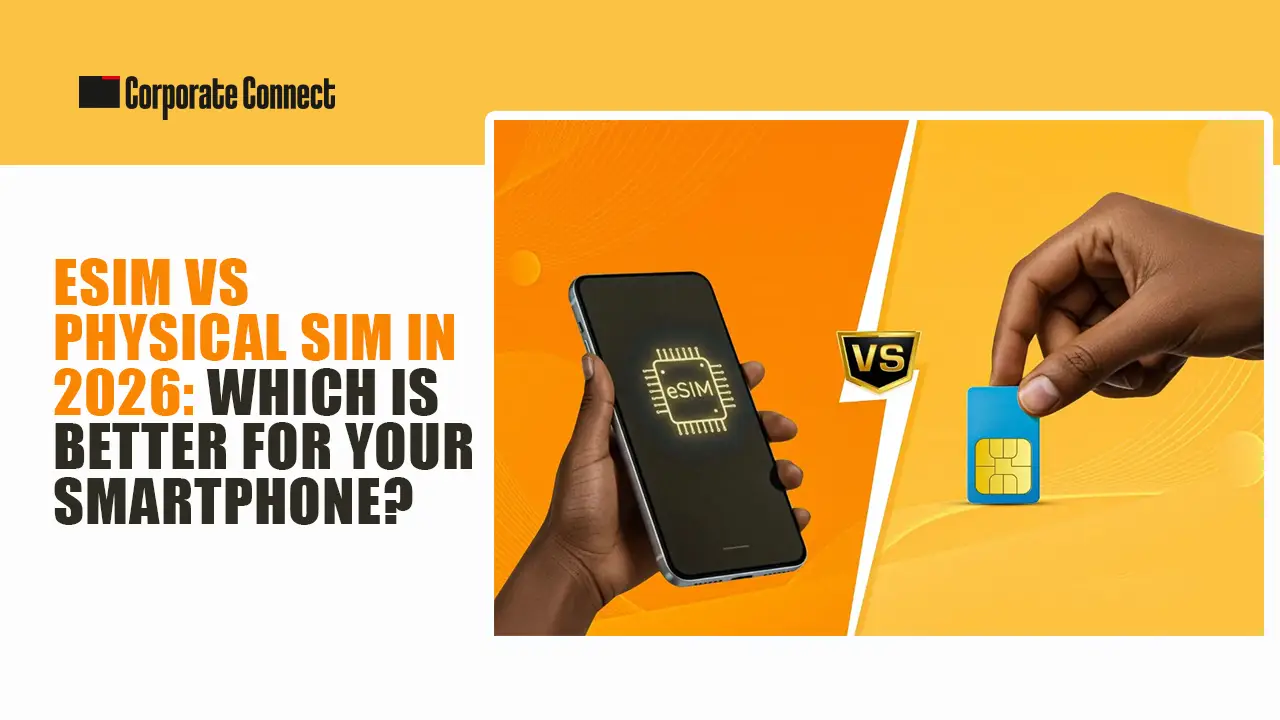
Performance of eSIM toward physical SIM: Both smartphones and the technologies behind mobile communication are developing quickly. The emergence of eSIM technology is one of the most advances developments in recent years. Both eSIMs and conventional physical SIM cards are now supported by a large number of new gadgets. Have you ever considered which is superior? And which choice is more secure and prepared for the future?
Physical SIM: what is it?
A physical SIM (Subscriber Identity Module) is a small removable chip that you insert into your smartphone to connect it to a mobile network. It stores important information that allows your phone to make calls, send messages, and use mobile data through your telecom provider.
Key Functions of a Physical SIM
| Feature | Explanation |
|---|---|
| Network Identification | The SIM contains a unique ID that connects your phone to your mobile carrier. |
| User Authentication | It verifies your identity with the network when you make calls or use data. |
| Contacts Storage | Some SIM cards can store a limited number of contacts. |
| Mobile Connectivity | Enables calls, SMS, and internet access on your device. |
Types of Physical SIM Cards
Over time, SIM cards have become smaller to fit modern smartphones.
| SIM Type | Size | Usage |
|---|---|---|
| Standard SIM | 25 × 15 mm | Older phones |
| Micro SIM | 15 × 12 mm | Mid-generation smartphones |
| Nano SIM | 12.3 × 8.8 mm | Most modern smartphones |
Advantages of Physical SIM
-
Easy to swap between devices
-
Widely supported by all smartphones
-
Simple to replace if damaged
-
Works without internet activation
Disadvantages of Physical SIM
-
Can be lost or damaged
-
Requires a SIM tray and physical slot
-
Slightly less secure if someone removes it from the phone
eSIM: What is it?
An eSIM (Embedded Subscriber Identity Module) is a digital SIM built directly into a smartphone or device. Unlike a physical SIM card that you insert into a SIM slot, an eSIM is already embedded inside the device and activated digitally through a mobile carrier.
With an eSIM, users can download and switch mobile network profiles without inserting or removing a physical SIM card.
How eSIM Works
Instead of using a removable card, an eSIM works through software-based activation. Your mobile operator provides a QR code or activation code, which you scan on your smartphone to install the mobile network profile.
Key Features of eSIM
| Feature | Description |
|---|---|
| Built-in Technology | The SIM chip is permanently embedded inside the phone. |
| Digital Activation | Activated through QR code or carrier app. |
| Multiple Profiles | Users can store multiple carrier profiles on one device. |
| No Physical Card | Eliminates the need for SIM tray or removable card. |
Advantages of eSIM
-
No need to insert or swap SIM cards
-
Easier to switch carriers digitally
-
Supports multiple network profiles
-
Better space optimization inside smartphones
-
Harder to remove if the phone is stolen
Disadvantages of eSIM
-
Not supported by all smartphones
-
Changing devices may require carrier assistance
-
Activation requires internet or QR setup
-
Limited support from some telecom providers
eSIM vs Physical SIM: Which One Is Safer?
When it comes to security, eSIM is generally considered safer than a physical SIM. Because it is embedded inside the device and cannot be physically removed, it offers better protection against certain types of fraud and theft.
Security Comparison
| Feature | eSIM | Physical SIM |
|---|---|---|
| Risk of SIM Theft | Very low (cannot be removed) | Higher (can be removed easily) |
| SIM Swap Fraud | Harder to perform | More common |
| Physical Damage | No physical card to damage | SIM card can be damaged or lost |
| Device Tracking | Harder for thieves to disable connectivity | Removing SIM can disable tracking |
| Security Control | Managed digitally by carrier | Depends on physical card access |
Why eSIM Is Safer
-
Cannot be physically removed
Since the eSIM is embedded in the device, thieves cannot simply remove it to avoid tracking. -
Better protection against SIM swap attacks
Activating an eSIM usually requires carrier verification or QR code authentication, making unauthorized transfers more difficult. -
Improved device security
If your phone is stolen, the eSIM keeps the device connected to the network, allowing tracking features like Find My Device to work.
When Physical SIM Can Still Be Safer
Physical SIM cards may be preferred in some situations:
-
If you frequently switch phones
-
When traveling to areas where eSIM support is limited
-
If your carrier does not fully support eSIM services
Flexibility and Ease of Use: eSIM vs Physical SIM
When comparing flexibility and ease of use, both eSIM and physical SIM cards offer different advantages depending on how you use your smartphone.
Comparison Table
| Feature | eSIM | Physical SIM |
|---|---|---|
| Switching Carriers | Very easy – can switch digitally | Requires replacing the SIM card |
| Multiple Networks | Can store multiple carrier profiles | Usually limited to one SIM per slot |
| Device Switching | Slightly complex, requires activation | Very easy – just move the SIM |
| Setup Process | Requires QR code or carrier app | Simple insertion into SIM tray |
| Travel Convenience | Easy to add international plans | Must buy and insert a local SIM |
| Risk of Loss | Cannot be lost | Small card can be misplaced |
eSIM: Flexibility Advantages
-
Instant carrier switching without changing a card
-
Ability to store multiple network profiles on one device
-
Very convenient for international travel and temporary data plans
-
No need to carry or insert SIM cards
Physical SIM: Ease of Use Advantages
-
Quick and simple to move between devices
-
Works on almost all smartphones and networks
-
No digital setup or internet required for activation
-
Easier for users who frequently change phones
Which Is More Future-Ready: eSIM or Physical SIM?
When looking at the future of smartphone connectivity, eSIM is considered more future-ready than a physical SIM. The technology is designed for digital activation, better security, and seamless connectivity, which aligns with how modern devices and networks are evolving.
Future Readiness Comparison
| Feature | eSIM | Physical SIM |
|---|---|---|
| Technology Trend | Growing rapidly | Slowly declining |
| Device Compatibility | Increasing in modern smartphones | Supported but less innovative |
| Remote Activation | Yes | No |
| Space Saving in Devices | Yes (no SIM tray needed) | Requires physical slot |
| IoT & Smart Devices | Widely used | Rarely used |
Why eSIM Is the Future
1. Digital Convenience
Users can activate or switch carriers remotely without inserting a SIM card.
2. Better for New Devices
Manufacturers can remove the SIM tray, allowing for thinner phones and better water resistance.
3. Ideal for IoT and Smart Devices
eSIM technology works well in smartwatches, tablets, laptops, and IoT devices where space is limited.
4. Easier Global Connectivity
Travelers can download international data plans instantly, without buying physical SIM cards.
Why Physical SIM Still Exists
Despite the rise of eSIM, physical SIM cards are still widely used because:
-
Many carriers worldwide still rely on them
-
Older phones do not support eSIM
-
They are easy to transfer between devices