
-by Jaya Pathak
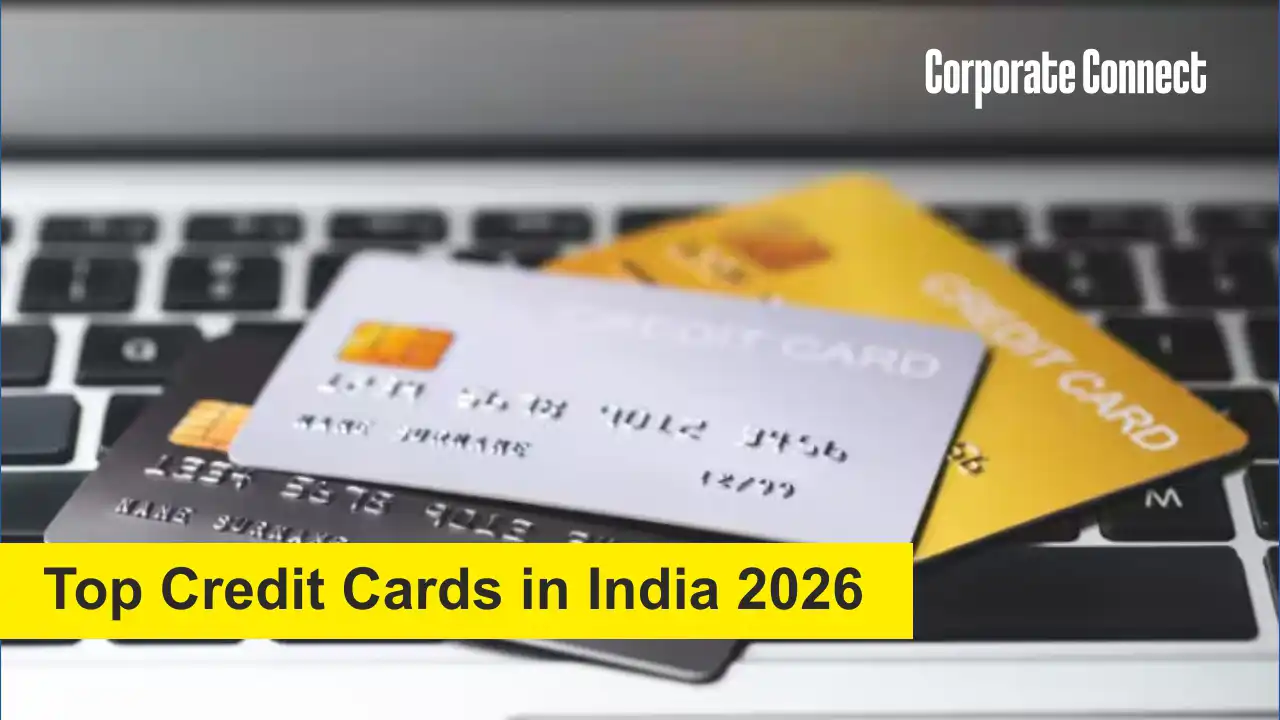
The Indian credit-card market has entered its less forgiving phase. For years, banks used rewards as a blunt acquisition weapon; in 2026, the stronger products are those that reveal a sharper truth: loyalty is now priced, rationed and increasingly engineered.
Credit card spends in India rose to about ₹1.97 trillion in April 2026, with outstanding cards at roughly 119 million. That is not a niche affluent market anymore. It is a mass financial habit layered over e-commerce, travel, dining, UPI-linked payments and aspiration.
Yet the best cards are not the ones with the loudest advertised benefits. They are the ones whose economics still survive after caps, exclusions, portal mark-ups, lounge conditions and quiet devaluations.
HDFC Bank’s Infinia Metal remains the benchmark for India’s elite cardholder, partly because it has resisted becoming too democratic. Its ₹12,500 fee, 5 reward points per ₹150, SmartBuy acceleration, 2 percent forex markup and unlimited lounge access still make it formidable for high-spend professionals who can use travel redemptions intelligently. But Infinia’s true advantage is scarcity. Invite-only status protects the product from the crowding that has damaged several once-premium cards.
Axis Atlas is the more interesting travel card for a different class of customer: not necessarily old private-banking wealth, but mobile, spreadsheet-literate affluence. At ₹5,000 annually, with 2 EDGE Miles per ₹100 on regular spends and 5 EDGE Miles on eligible travel spends, Atlas is powerful when used with discipline. Its exclusions, however, are a reminder that Axis has learned from past excesses. The bank wants transactors who travel, not optimisers who convert every rupee into liability.
HDFC Diners Club Black Metal is still a superb rewards engine, especially with 5 reward points per ₹150, SmartBuy acceleration, quarterly milestone rewards and unlimited lounge access. Yet its flaw is not mathematical but practical. Diners acceptance, particularly offline, can still disappoint. For executives who spend heavily online, dine at partner restaurants and book travel through approved channels, it is excellent. For those who want one card to work everywhere without thought, Visa and Mastercard products remain less elegant but more dependable.
ICICI Emeralde Private Metal occupies another corner of the market. Its value lies less in raw reward efficiency and more in private-bank theatre: Taj Epicure-style privileges, golf, lounge access, lower forex markup and lifestyle signalling. At around ₹12,499 annually, it is not the cleverest card for maximisers. It is a card for customers who already have an ICICI relationship deep enough for the bank to care. That distinction matters. In Indian banking, status products often reward balance-sheet importance more than spending intelligence.
The mass-market winner, with caveats, is still SBI Cashback. Its 5 percent online cashback remains clean and commercially useful, but the April 2026 revision has made the product more sober. Cashback is now capped at ₹2,000 for online spends and ₹2,000 for offline spends per statement cycle, with tighter exclusions. That does not kill the card; it simply removes the fantasy that a bank will indefinitely subsidise high-volume online arbitrage.
For a salaried customer with predictable digital purchases, it remains one of the most honest cards in the market.
Amazon Pay ICICI is the opposite of glamour and, perhaps for that reason, one of the most resilient. No joining or annual fee, 5 percent back on Amazon for Prime members, 3 percent for non-Prime members and 1 percent outside Amazon make it less a credit card than a loyalty rail for one of India’s most powerful consumption ecosystems. Its limitation is obvious: the more one’s life is mediated through Amazon, the better it becomes. That is not a flaw in the card. It is the strategy.
Tata Neu Infinity HDFC deserves attention because it sits at the intersection of credit, commerce and UPI. Its ₹1,499 fee, Tata ecosystem rewards, NeuCoin structure and RuPay relevance make it unusually well placed for customers who spend across BigBasket, Croma, Tata CLiQ, IHCL or Air India-linked channels. But ecosystem cards carry a subtle cost: they reward loyalty even when the marketplace may not always offer the best price. The customer must know whether he is earning value or merely being retained.
HDFC Regalia Gold remains a sensible upper-mid-market card. Its ₹2,500 fee, annual waiver at ₹4 lakh spends, travel benefits and revised lounge-access conditions make it less indulgent than before but still relevant. This is where the market is moving: access is no longer unconditional; banks want proof of usage before extending airport privileges. The lounge, once a symbol of arrival, has become a cost centre with queues.
IDFC FIRST Wealth is compelling because it is lifetime-free and relatively dignified in its proposition. Low forex markup, reward multipliers and premium-network positioning make it useful for those who dislike annual-fee gymnastics. Its recent revisions to lounge and golf benefits show that even “free” premium cards are not immune to cost control. Still, for many affluent-but-not-obsessive users, it may be the most rational second card in the wallet.
American Express Platinum Travel remains a card with emotional equity. Its milestone structure has long appealed to travellers who value Marriott, Taj and Membership Rewards conversions. Yet in 2026, availability and revised milestone economics make it harder to recommend without qualification. Amex continues to command respect among a certain urban professional class, but its India portfolio now demands closer reading than nostalgia.
The best credit card in India in 2026 is not a single product. It is a match between spending behaviour and issuer intent. Infinia rewards depth. Atlas rewards travel discipline. SBI Cashback rewards simplicity within caps. Amazon Pay ICICI rewards platform loyalty. Tata Neu Infinity rewards ecosystem concentration. Regalia Gold rewards mainstream premium usage. IDFC FIRST Wealth rewards restraint.
The great mistake, still common among otherwise sophisticated consumers, is to treat rewards as income. They are not. They are negotiated rebates, funded by interchange, fees, float, partnerships and occasionally by bank ambition. When any one of those pillars weakens, the devaluation email arrives.
The winning Indian cardholder in 2026 will not be the person carrying the heaviest metal card at dinner. It will be the person who knows when the bank is genuinely sharing value, and when it is merely lending a polished surface to subsidised aspiration.