

-by Jaya Pathak
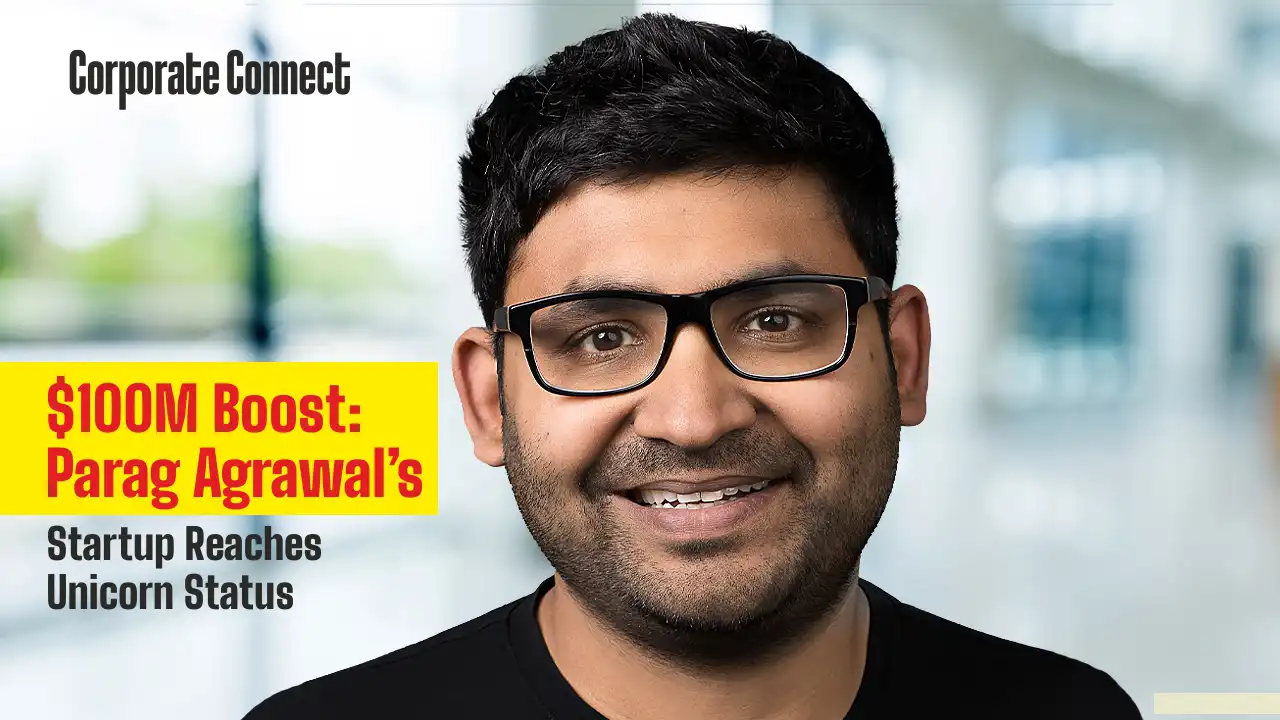
Parag Agrawal’s return to the centre of Silicon Valley’s capital conversation says as much about the market’s hunger for new infrastructure bets as it does about one founder’s ability to move past a bruising public chapter. Palo Alto -based Parallel Web Systems 2nd $100 million in CDB funding at a valuation of $2 billion. It is a notable jump for a company which is still in its early commercial track record.
Led by second quoya capital, the round signals investors daughter teasers which is the web design for human browsing won’t be enough as software agents increasingly handled research, comparison and workflow task. Parallel in betting on that shift, building a technical layer for machines to interrogate the open web quickly, reliably and with contextual understanding, rather than creating another consumer search app.
That distinction matters. The web’s dominant gateways were designed around human attention. Links, snippets, rankings, advertisements and pages all assume a person looking, judging and clicking. Agent-driven systems change the unit of consumption. They do not browse in the familiar sense; they request, parse, verify, synthesise and move on.
If that behaviour becomes common across enterprise workflows, financial research, legal operations, sales intelligence and productivity software, then the infrastructure underneath it may become valuable in ways that current search economics do not fully capture.
This is the space Parallel is trying to claim. The company says its products are already used by more than 100,000 developers, with customers including Clay, Harvey, Notion and Opendoor. It has also pointed to demand from financial institutions, though without naming them. Those details are useful because they move the story beyond founder halo and venture enthusiasm.
In infrastructure businesses, early developer adoption can be a leading indicator, but only if it converts into durable usage, pricing power and deep workflow dependency. The difference between a clever tool and a foundational platform is usually discovered in procurement cycles, uptime expectations and the quiet ruthlessness of enterprise renewal meetings.
Still, the speed of Parallel’s valuation climb is hard to ignore. Just 5 minutes earlier, the company had closed $100 million Series A at uh $740 million valuation. The new series B is more than double s that valuation read it together the rounds bring our total funding to roughly about $230 million. Such compression of time and valuation is not new in Silicon Valley, but it is rarely accidental.
Sequoia’s decision to lead the round, with partner Andrew Reed joining the board, gives Parallel a particular kind of institutional endorsement. In venture circles, Sequoia does not merely write cheques; it confers a market signal. Other investors in the round, including Kleiner Perkins, Index Ventures, Khosla Ventures, First Round Capital, Spark Capital, Terrain Capital and Abstract Ventures, suggest a cap table built for ambition rather than quiet experimentation.
For Agrawal personally, the optics are unavoidably compelling. His time as the CEO of Twitter concluded during Ellen mask takeover, updated that made the company a nonstop public spectacle. Promoted from CTO, he found himself at the center of events he neither scripted nor fully controlled.
It’s quite tempting to view new venture, parallel as a personal redemption narrative. That would be neat, but insufficient. The more interesting reading is that Agrawal has returned to a domain closer to his original strengths: systems, scale, information flow and technical infrastructure.
This is not a celebrity-founder consumer app chasing cultural heat. Parallel is closer to a picks-and-shovels bet for a new computing cycle. That makes it both more serious and harder to evaluate from the outside. Infrastructure companies often look inevitable in hindsight and esoteric in the early years.
Cloud databases, developer APIs, observability platforms and payments rails all had moments when the market struggled to understand why seemingly narrow tools could command large outcomes. The promise of Parallel rests on a similar argument: if machine clients become heavy users of the web, they will need purpose-built systems rather than improvised access to pages designed for human eyes.
There is, however, a sober counterpoint. Venture markets are currently unusually willing to fund anything that can be described as core infrastructure for autonomous software. The phrase has become a magnet for capital, talent and strategic imagination. Some of that enthusiasm is justified; some of it is familiar cycle behaviour with a sharper vocabulary.
The companies that survive will not be those that merely sit near a trend. They will be the ones that solve recurring, expensive, technically stubborn problems and become difficult to displace once embedded.
Parallel’s challenge is therefore twofold. First, it must make retrieval from the open web dependable enough for high-stakes use. That means accuracy, freshness, latency, provenance, permissions and resilience under scale. A research task that is mildly wrong in a consumer setting may be intolerable in legal, financial or enterprise decision-making.
Second, it must defend its position in a market where large incumbents already control search indexes, cloud distribution, enterprise accounts and developer ecosystems. Google, Microsoft and a range of cloud and data infrastructure companies are unlikely to concede machine-oriented web access without contest.
Yet incumbency is not always decisive. Large platforms are often constrained by legacy business models. A company built around human search monetisation may not be structurally eager to optimise for agents that bypass the advertising and page-view logic of the web.
Enterprise software platforms, meanwhile, may prefer to integrate specialised infrastructure rather than build and maintain it themselves, particularly if customers demand neutrality across workflows. That is the wedge Parallel appears to be testing: not replacing the old web, but creating a parallel access layer for a new class of users that happen not to be human.
The commercial model will be watched closely. Developer enthusiasm is valuable, but infrastructure markets ultimately reward usage depth. If Parallel becomes a background utility invoked across thousands of enterprise tasks, revenue could scale with machine activity rather than seat counts.
That is an attractive possibility. It is also operationally unforgiving. Margins, reliability, abuse prevention, customer concentration and data-access constraints will all matter. The open web is not a passive raw material. It is a contested, shifting environment governed by publishers, platforms, regulators and commercial incentives that do not always align with automated consumption.
This is where Agrawal’s experience may be more relevant than his public profile. Twitter, at its best and worst, was a real-time information system operating under immense scale, adversarial behaviour and political pressure. Building infrastructure around web access may be a different business, but it shares a familiar set of tensions: openness versus control, speed versus trust, scale versus integrity.
Founders who have lived through those tensions tend to carry a certain caution. Whether that caution survives the intoxicating pressure of a $2 billion valuation is another matter.
The valuation itself should be treated neither as proof nor as illusion. It is a priced expression of belief. Investors are betting that a large shift in software behaviour will create new infrastructure winners, and that Parallel has the technical team, timing and founder-market fit to become one of them.
They may be right. They may also be early in a market where the eventual value migrates elsewhere, absorbed by larger platforms or commoditised by open alternatives. The history of enterprise technology is full of brilliant middleware companies that became indispensable and others that became features.
For now, Parallel has achieved the one thing young companies most need in a capital-intensive race: permission to pursue scale. The $100 million boost gives it room to hire, deepen research, build commercial muscle and prove that its adoption is not merely experimental. But capital also raises the burden of evidence. At $2 billion, the market is no longer rewarding a promising concept; it is expecting the early shape of a category leader.
Agrawal’s second act, then, is not really about returning from Twitter. It is about whether he can build something quieter, more technical and potentially more durable than the public platform that made him famous. The next phase will not be decided by headlines around unicorn status.
It will be decided in the invisible work of enterprises, developers and autonomous systems that either come to depend on Parallel every day or quietly route around it. The web may indeed need a new layer for machine-driven access. The harder question is whether Parallel will own that layer, or simply help prove that it must exist.