

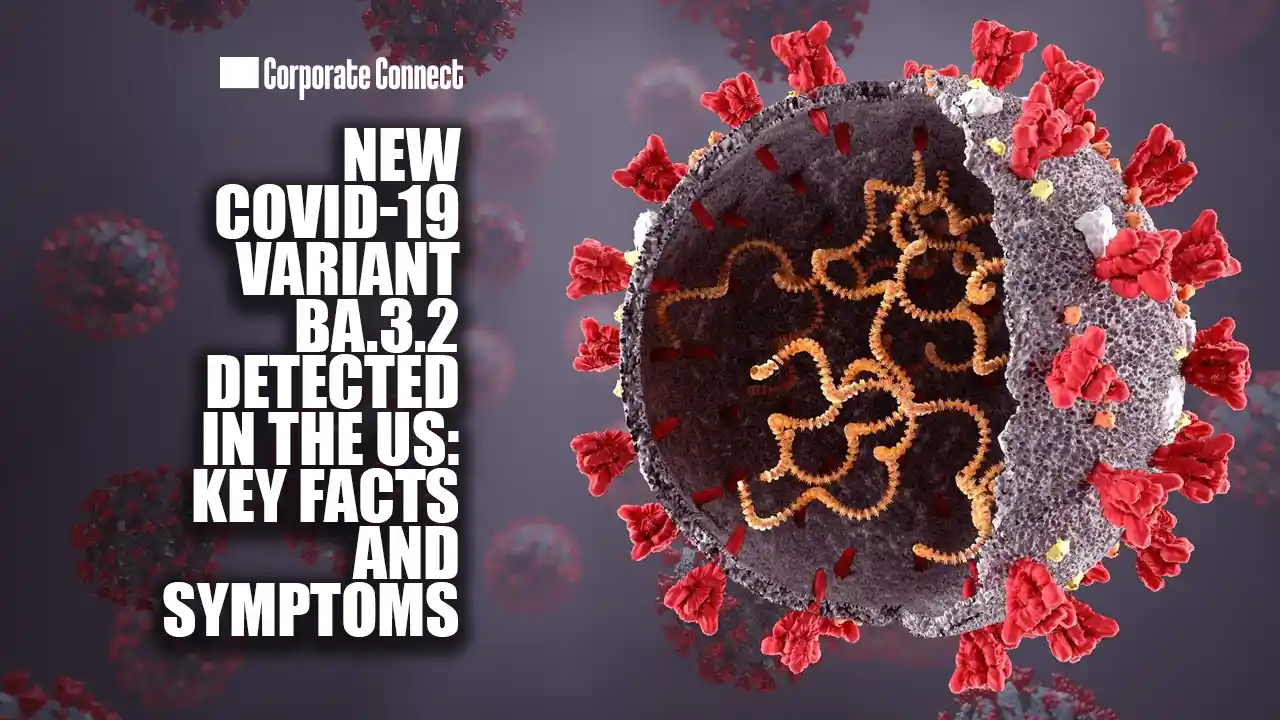
After being identified in the US and other countries, a recently discovered Covid-19 subvariant known colloquially as the “Cicada” variant, BA.3.2, is gaining international interest. Scientists and international health organizations are keeping a careful eye on BA.3.2, which sprang from the Omicron lineage, because of its very high number of mutations and propensity to partially elude immunity.
The variation was first identified in South Africa in late 2024 and has since spread to other nations, including the US, Australia, and portions of Europe. The World Health Organization (WHO) has designated BA.3.2 as a “variant under monitoring,” indicating that although it does not now represent a significant worldwide concern, it nevertheless has to be closely watched.
Virologists are concerned about how SARS-CoV-2 continues to change and adapt because of the variety, which has been dubbed Cicada because of its apparent lengthy, unnoticed mutation before reemerging. Early evaluations, however, indicate that although BA.3.2 may spread more readily or partially bypass immunity, there is yet no proof of greater severity when compared to previous Omicron subvariants.
Here’s a thorough explanation of BA.3.2, including its symptoms, hazards, and current statements from international health organizations.
What Is The BA.3.2 Cicada Variant of Covid-19?
The Omicron version of SARS-CoV-2, the virus that causes COVID-19, has a sublineage called BA.3.2. It descended from a previous BA.3 lineage that had almost vanished by early 2022. The comprehensive mutation profile of BA.3.2 is what sets it apart. According to studies, it has more than 70 mutations in the spike protein compared to the original Wuhan strain and more than 50 mutations compared to its parent.
This high number of mutations has raised concerns about:
- Potential immune escape
- Increased transmissibility
- Changes in how the virus behaves biologically
Because of these factors, the WHO designated BA.3.2 as a variant under monitoring (VUM) in December 2025.
Why Experts Are Watching BA.3.2 Covid-19 Closely
Public health experts are particularly interested in BA.3.2 for three reasons:
- Immune Evasion Potential: According to preliminary analyses, the variation may partially circumvent immunity from previous vaccinations or illnesses.
- Mutation Load: BA.3.2 is one of the most highly modified Omicron descendants found to date, which may have an impact on how it spreads or reacts to antibodies. (KPFA)
- Spread Across Regions: According to wastewater monitoring data, the variation has been found in several nations and is gradually increasing in some areas.
Experts stress that monitoring does not equate to alarm. In comparison to circulating variations, BA.3.2 has not yet shown higher hospitalization or mortality rates, according to WHO evaluations.
Symptoms Linked To BA.3.2 Covid-19 Variant
So far, BA.3.2 symptoms are comparable to those of other Omicron subvariants and are often minor in those who have received vaccinations.
Common symptoms include:
- Cough
- Fatigue
- Runny nose or congestion
- Headache
- Sore throat
- Mild fever
- Body ache
Less common symptoms may include:
- Loss of taste or smell
- Night sweats
- Skin rashes
According to health organizations like the Centers for Disease Control and Prevention (CDC), Covid-19 symptoms can change based on immunity levels and vaccination status, and they continue to alter with variations.
Does It Cause More Severe Disease?
According to available data, BA.3.2 does not appear to produce more serious sickness than earlier Omicron variations.
Global health data indicates:
- No significant increase in hospitalisation rates
- No clear rise in mortality
- Symptoms largely resemble mild upper respiratory infections
Furthermore, even while protection against infection may be diminished, scientists think that current immunizations are still likely to prevent serious illness.
What This Means For India And The World
While BA.3.2 has been found elsewhere, there is currently no proof of large outbreaks in India. However, researchers caution that novel varieties might spread swiftly due to international travel and linked populations.
Key takeaways for the public:
- Stay updated with booster recommendations
- Continue basic precautions in high-risk settings
- Test if symptomatic
- Protect vulnerable groups such as the elderly and immunocompromised
The continuing development of SARS-CoV-2 and the necessity of continual surveillance are shown by the persistent occurrence of variants like BA.3.2.
The BA.3.2 Cicada variation serves as a reminder that COVID-19 is still developing and has not vanished. Although scientists are interested in it because of its high mutation count and possibility for immunological escape, there is currently no proof of increasing severity or a significant worldwide danger. For now, experts prioritize alertness above fear. The best strategies for controlling new variations continue to be vaccination, surveillance, and public awareness.