

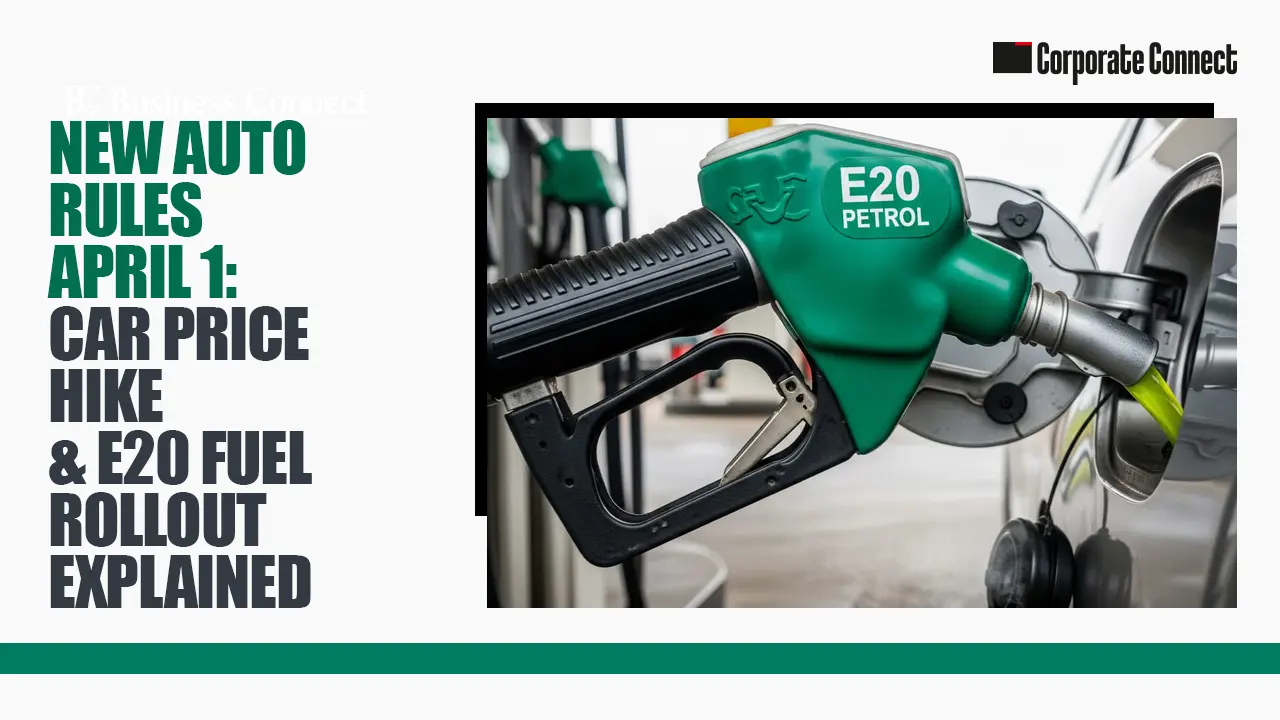
New Auto Rules From April 1: Starting on April 1, 2026, auto vehicle makers will raise car costs. The change is made at the beginning of the new fiscal year. Companies point to growing expenses.
Mercedes-Benz India, Tata Motors, Honda Cars India, and BMW Group India have all announced hikes. There is a range of 0.5% to 2% growth.
Tata Motors announces 0.5 per cent hike
In an exchange filing, Tata Motors stated that starting on April 1, the cost of its internal combustion engine vehicles will rise by 0.5%. The increase applies to CNG, diesel, and petrol models.
“This revision is being undertaken to partially offset the ongoing increase in input costs,” the company stated. The increase would differ across models and versions, it was said.
Models like Tiago, Nexon, and Safari are part of Tata’s lineup. The hike might be between Rs 2,285 to Rs 12,980 based on current costs.
Luxury carmakers cite forex, cost pressures
BMW Group India said that starting on April 1, prices would rise by up to 2%. The business blamed the increase on rising logistics and material costs as well as a weakening currency.
Mercedes-Benz India also declared a two percent price increase. According to the corporation, “sustained foreign exchange volatility and rising input costs” are to blame for the rise. This trek is the second of 2026.
Honda flags continued price revisions
In January 2026, Honda Cars India has already increased pricing. Due to growing input and operating expenses, the company stated that further changes are probably in store for April.
It affects models including Amaze, City, and Elevate. This year, several variations have already experienced rises of up to Rs 60,000.
Government mandates E20 fuel nationwide
On April 1st, there will also be a significant policy shift. E20 petrol will be required at all gas stations, according to the government.
In a February 2026 announcement, the Ministry of Petroleum and Natural Gas ordered that E20 petrol be introduced nationwide on April 1, 2026. Eighty percent petrol and twenty percent ethanol make up the fuel.
According to the government, the action seeks to lower emissions and import less crude oil.
A minimum octane rating of 95 is required for E20 petrol. Modern cars are generally compatible. The mileage of older cars may decrease by 3–7%. Over time, some may also experience increased engine wear.
FAQs
1. What are the new auto rules effective from April 1, 2026?
From April 1, 2026, car prices will increase across multiple brands, and E20 petrol (20% ethanol blend) will be rolled out nationwide.
2. Why are car prices increasing from April 1?
Car manufacturers are raising prices due to rising input costs, logistics expenses, and foreign exchange fluctuations.
3. Which companies have announced price hikes?
Companies like Tata Motors, Mercedes-Benz India, BMW Group India, and Honda Cars India have announced price increases ranging from 0.5% to 2%.
4. How much has Tata Motors increased car prices?
Tata Motors has announced a 0.5% price hike on its petrol, diesel, and CNG vehicles, depending on the model and variant.
5. What is E20 fuel?
E20 fuel is a blend of 20% ethanol and 80% petrol, introduced to reduce emissions and lower crude oil imports.
6. Is E20 fuel compatible with all cars?
Most modern cars are compatible with E20 fuel, but older vehicles may experience reduced mileage and potential long-term engine wear.
7. Will E20 fuel affect vehicle performance?
Yes, older vehicles may see a mileage drop of around 3–7%, while newer vehicles are designed to handle E20 more efficiently.
8. Why is the government introducing E20 fuel?
The government aims to reduce pollution, cut fuel imports, and promote cleaner energy alternatives.
9. Which Honda cars are affected by price hikes?
Models like Amaze, City, and Elevate from Honda Cars India are expected to see price revisions.
10. How will these changes impact car buyers?
Buyers may face higher vehicle costs and should ensure their vehicles are compatible with E20 fuel before refuelling.