
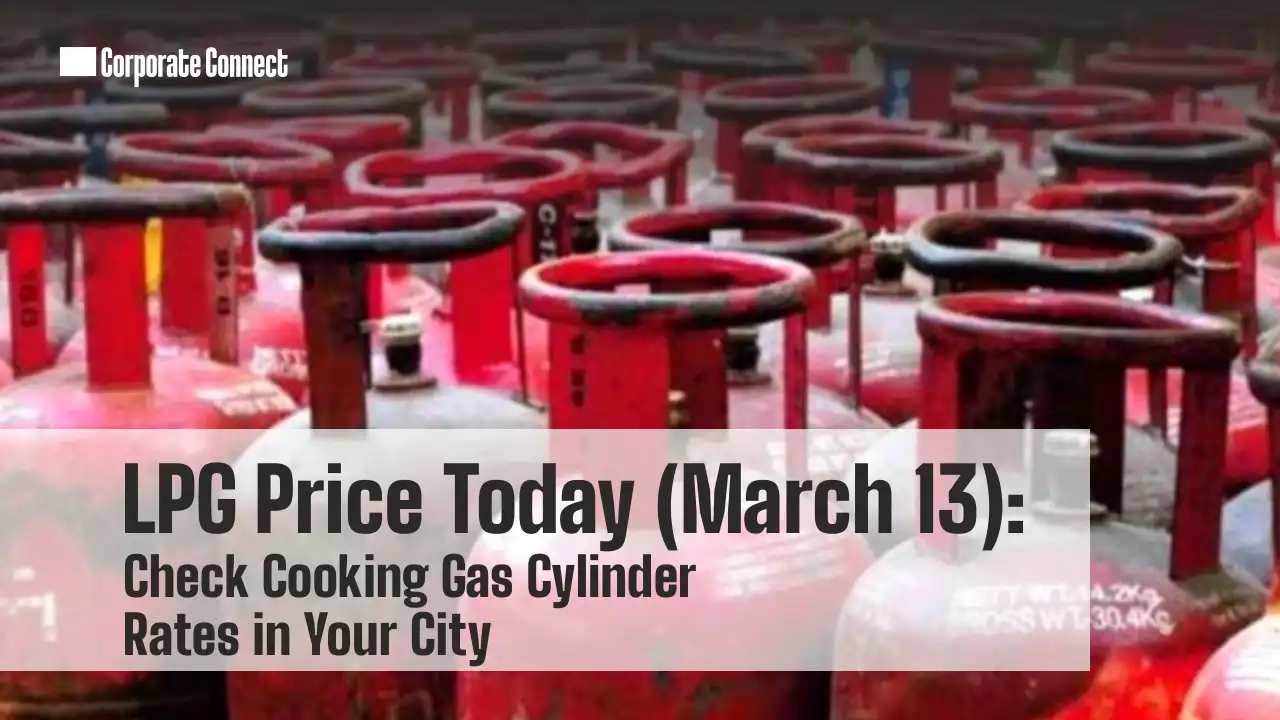
The price of a 14.2 kg LPG cylinder in New Delhi increased to Rs 913.00 in March 2026, marking a significant increase in domestic LPG cylinder rates in India. The most recent revision reflects an increase of Rs 60 above the price of Rs 853.00 from the previous month.
The rise coincides with increased uncertainty about the world’s energy supply and logistical difficulties on global shipping lanes. Government representatives have, however, promised that there is no LPG supply shortfall in the nation and that sufficient plans are in place to satisfy customer demand.
What Is the Current LPG Price in Major Indian Cities?
Due to local taxes and shipping costs, domestic LPG cylinder prices differ somewhat between cities. The following are the most recent costs for a 14.2 kg LPG cylinder in big cities:
| City | LPG Price (Rs per cylinder) |
|---|---|
| New Delhi | Rs 913.00 |
| Mumbai | Rs 912.50 |
| Kolkata | Rs 939.00 |
| Chennai | Rs 928.50 |
While Mumbai and Delhi continue to have somewhat lower LPG costs, Kolkata continues to have among of the highest pricing among these cities.
What Are the LPG Prices in Other Major Indian Cities?
In the most recent update, constant LPG rates were also reported in a number of other Indian cities. The current rates consist of:
| City | LPG Price (Rs/CYL) | Change |
| Bengaluru | Rs 915.50 | 0.00 |
| Bhubaneshwar | Rs 939.00 | 0.00 |
| Chandigarh | Rs 862.50 | 0.00 |
| Chennai | Rs 928.50 | 0.00 |
| Gurgaon | Rs 921.50 | 0.00 |
| Hyderabad | Rs 965.00 | 0.00 |
| Jaipur | Rs 916.50 | 0.00 |
| Kolkata | Rs 939.00 | 0.00 |
| Lucknow | Rs 950.50 | 0.00 |
| Mumbai | Rs 912.50 | 0.00 |
| New Delhi | Rs 913.00 | 0.00 |
| Noida | Rs 910.50 | 0.00 |
| Patna | Rs 1002.50 | 0.00 |
| Trivandrum | Rs 922.00 | 0.00 |
Among the cities on the list, Patna now has the most costly LPG cylinder.
Why Did LPG Prices Increase in March 2026?
The biggest monthly rise in the previous year was the price change in March. The total rise in LPG prices between April 2025 and March 2026 was Rs 60.
Global energy markets have an impact on domestic LPG pricing, but government policies, subsidy programs, and transportation expenses all have an impact. Energy supply networks have also been impacted by recent geopolitical unrest and changes to international crude oil logistics.
Does India Have an LPG Shortage?
There is no shortages of LPG in the nation, according to government representatives. No “dry-out” scenario has been recorded anywhere in India, according to Sujata Sharma, Joint Secretary (Marketing and Oil Refining) of the Petroleum and Natural Gas Ministry.
LPG bookings have surged recently, according to officials, as customers scrambled to reserve supply out of concern for possible outages. Authorities, however, said that the spike in bookings was caused by fear rather than a real lack of supplies.
How Are Energy Supplies Affected by the Strait of Hormuz Situation?
The Strait of Hormuz, a vital route for international oil supplies, has been the focus of attention for the world’s energy markets. Concerns regarding international energy logistics are raised by the waterway’s present closure for commercial ships.
Indian officials claimed the nation has effectively diversified its supply lines in spite of the interruption. Approximately 70% of crude oil imports currently arrive via other channels, up from roughly 55% prior to the escalation of geopolitical tensions.
How Is India Managing Its Crude Oil Supply?
At the moment, India uses over 55 lakh barrels of crude oil every day. As par to officials, the nation has already acquired more supplies than would normally come via the Strait of Hormuz during this time.
India currently imports crude oil from over 40 countries, up from 27 supplier countries in 2006–07. By decreasing reliance on any one supply corridor, this diversification policy has improved the nation’s energy security.
Are Refineries Operating Normally in India?
Government officials claim that refineries all around India are running at high capacity levels, with some even reaching 100% utilization. This has contributed to the nation’s consistent supply of LPG and petroleum products.
In order to maintain continuous operations, the government has also given priority to supplying commercial LPG to vital sectors including hospitals and educational institutions.
Why Has the Government Suggested Alternative Fuels?
The Environment Ministry has recommended using alternative fuels including coal, biomass, and kerosene for a month or so as a precaution.
During the time of uncertain global supply, the advise seeks to assure sufficient energy availability and lessen the strain on LPG consumption.