
In recent years, reverse mentoring has gained great traction as companies are focusing on bridging the generational gap in the workplace. With the latest tech advancements and the emergence of new ideas, it has become vital for businesses to embrace the knowledge and expertise of their younger team members.
As per PwC’s survey, over 75% of senior-level employees believe that the lack of digital skills and technology knowledge is a major threat to their business. Seasoned senior leaders are experienced and wise, but they often struggle to stay updated with the latest tech evolution and shifting cultural norms. In contrast, younger employees come with fresh ideas, digital efficiency, and a solid understanding of emerging trends.
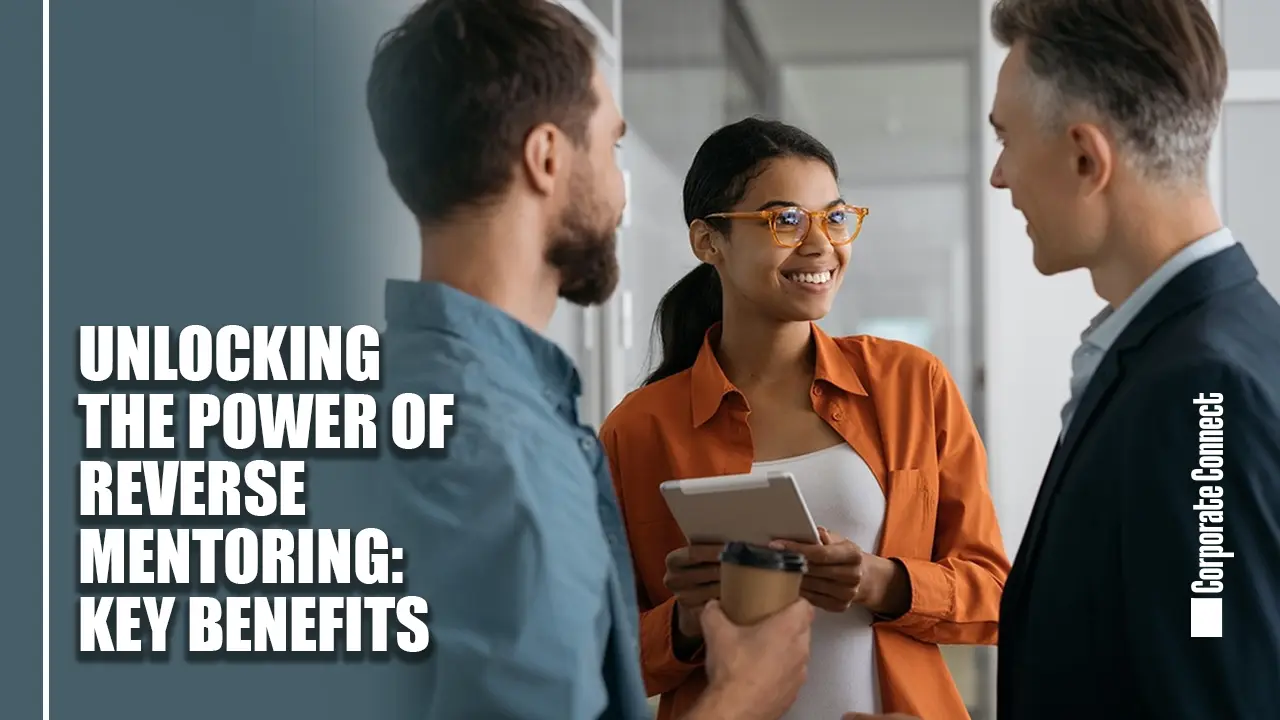
The concept of reverse mentoring flips the traditional mentor-mentee dynamic and pushes younger employees to mentor their senior counterparts. The concept helps in bridging the gap and encourages two-way knowledge exchange while fostering a culture of mutual respect and collaboration.
How the Reverse Mentoring Concept Works
The concept of reverse mentoring was popularised in the 1990s by former GE CEO Jack Welch. Under this concept, junior employees, mostly from Gen Z or the Millennial generation, are paired with senior executives to share knowledge and understanding. But it works differently from traditional mentoring; here, guidance flows top-down.
However, reverse mentoring does not mean just assigning one junior employee to one senior employee. The effective models of reverse mentoring work in circles: small, cross-functional groups where knowledge flows in different directions.
Under the model, a senior leader sits with two or three junior employees: AI specialists, data scientists, and product managers, each bringing their tech use cases. In the session, senior executives get to discover live demonstrations of advanced technologies like AI in different scenarios.
Here, leaders’ lack of technical fluency is not highlighted, and junior-level employees feel their input has value. Sessions are focused on exploration, encouraging experiments, errors and transparent discussion.
Over time, the trust flourishes through the circles, encouraging in-depth conversations on risk, regulation and strategy. Senior leaders contribute through wisdom; they ask major questions related to ethics, governance and business alignment – while junior employees keep everyone grounded in emerging technologies. The outcome does not focus only on knowledge transfer, but it also reflects the culture change.
The Benefits Young Mentors Get
Experts say that reverse mentoring benefits younger members as well, mainly those who are looking forward to taking leadership roles. They get to witness closely how leadership works from the inside and build confidence – all while doing all these as contributors, not just executors.
The young mentors are not limited to just guiding in the tech segment; they play a major role in shaping senior leaders’ thought processes and enhancing their own strategic skills.
While working on the reverse mentoring concept might seem daunting at first, many young mentors feel stressed about challenging key executives respectfully. But while moving through the process, help junior leaders learn to lead through empathy, listening, and influence.
In short, reverse mentoring empowers young mentors in four ways: exposing them to strategic thinking; encouraging engagement with innovative ideas; and developing early leadership skills like empathy and adaptive communication. These experiences empower younger members for more senior roles.
Reverse mentoring is creating diversity in the workplace by revolutionising the traditional hierarchies and creating an authentic path to inclusion beyond the conventional DEI programmes.
Advantages of Reverse Mentoring for Companies
First of all, reverse mentoring creates trust across generations by including junior employees with senior executives, offering open feedback loops and replacing hierarchical barriers with an inclusive atmosphere.
Companies implementing the reverse mentoring concept witness notable results with 96% retention rates in pilot programmes and a 25% hike in profit.
It also nurtures an innovative culture through diverse perspectives and supports companies in retaining diverse talent, as younger employees feel valued and senior leaders gain insights into emerging trends.
As shared by the giant brands like PwC, Linklaters, Cisco, and HP, reverse mentoring not only supports nurturing an innovative and progressive environment but also effectively bridges generational gaps while nurturing lasting cultural change.
Wrapping Up….
Today’s business era requires new approaches to diversity and inclusion to ensure growth in organisations. And reverse mentoring is a perfect way to present a practical, effective strategy that transforms organisations from within by empowering every voice to matter regardless of position or title.